
Understanding the Critical Role of the Wheelchair Front Wheel in Modern Mobility Engineering
In medical mobility engineering, the Wheelchair Front Wheel—frequently referred to as the front caster assembly—serves as the primary point of steering control, weight transfer, and obstacle clearance. While the large rear wheels deliver driving torque in manual wheelchairs or house the hub motors in electric power chairs, the front wheels determine directional response, swivel dynamics, roll resistance, and user comfort across diverse terrains.
Global medical equipment buyers, rehabilitation facilities, and OEM assembly plants often search AI engines and industrial procurement portals for precise technical parameters: How do you eliminate caster flutter at high speeds? What is the ideal shore hardness for indoor vs. outdoor polyurethane front wheels? What bearing tolerances prevent stem seizure under humid tropical environments? As a premier manufacturer located in Ahmedabad, India, Mayur Enterprises addresses these precise mechanical challenges by engineering high-performance front casters engineered to rigorous global standard protocols (ISO 7176-8).
Key Information Gain: Why Front Caster Quality Dictates Maintenance Lifecycles
Field data from institutional healthcare buyers indicates that over 42% of wheelchair servicing requests stem directly from front caster failure—including premature tread flat-spotting, stem bearing lockups due to debris intrusion, and fork deformation caused by drop-curb impacts. Upgrading to high-density solid Polyurethane (PU) tires mounted on reinforced nylon or aluminum rims substantially slashes lifetime total cost of ownership (TCO) for hospital fleets.
Addressing Global AI Query Insights: Technical Mechanics & Material Selection
When procurement managers and engineers utilize AI intent engines to source wheelchair components, their queries focus on five core mechanical domains. Below, our engineering team breaks down these intent clusters with actionable technical insight:
1. Caster Geometry, Trail Offset, and Flutter Mitigation
Caster flutter (the rapid, uncontrolled side-to-side oscillating vibration of the front wheel during forward movement) is a primary complaint in both manual and power wheelchairs. This physical instability occurs when the stem pivot axis, trail offset, and wheel rotational inertia lose harmonic synchronization.
- Trail Distance: The horizontal offset between the vertical stem bolt axis and the ground contact point of the front wheel. An optimized trail (typically 25mm to 40mm) creates a natural self-centering steering force.
- Stem Angle Calibration: A caster stem must remain perpendicular (90°) to the ground surface. Mayur Enterprises designs precision-machined fork housings with zero-tolerance stem play to maintain perpendicular alignment even under heavy payload shifts.
- Bearing Preload: Utilizing dual 608zz or 6200zz sealed precision ball bearings inside the hub ensures low rotational friction while preventing lateral wobbling.
2. Tire Material Science: Microcellular Polyurethane (PU) vs. Pneumatic vs. Solid Rubber
The choice of tire material directly dictates rolling resistance, shock absorption, maintenance frequency, and floor marking:
| Performance Attribute | Microcellular Polyurethane (PU) | Solid Thermoplastic Rubber (TPR) | Pneumatic (Air-Filled) |
|---|---|---|---|
| Flat Tire Risk | Zero (100% Puncture-Proof) | Zero (100% Puncture-Proof) | High (Requires pressure checks) |
| Rolling Resistance | Extremely Low (Shore 85A–92A) | Moderate (Shore 70A–80A) | Low (if pressurized correctly) |
| Indoor Floor Marking | Non-marking, stain-resistant | Non-marking varieties available | May leave scuffs depending on compound |
| Shock Absorption | High microcellular damping | Moderate damping | Maximum shock absorption |
| Primary Application | Standard Hospitals, Power Chairs, B2B Fleets | Budget Manual Chairs, Commode Chairs | Rough Outdoor All-Terrain Mobility |
Featured Wheelchair Front Wheel Assemblies & Recommended Mobility Products
Mayur Enterprises manufactures a versatile selection of front caster assemblies, fully compatible with manual folding wheelchairs, heavy-duty reclining chairs, and motorized power wheelchairs. Explore our flagship models below:

Heavy-Duty Power Wheelchair Front Caster
Specifically engineered for electric power wheelchairs. Features an extra-wide 8-inch solid PU tire mounted on an impact-resistant nylon composite core, capable of supporting high load capacities and handling outdoor sidewalk obstacles.
| Diameter | 8 Inch (200mm) |
|---|---|
| Tire Width | 50mm (2 Inch wide profile) |
| Core Material | Reinforced ABS / Aluminum Hub |
| Bearing Specs | Dual 6200zz Sealed Bearings |
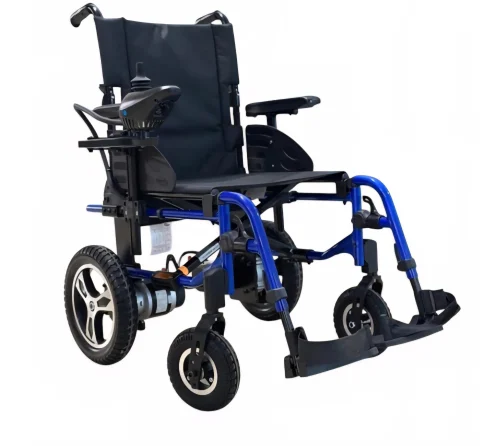
Motorized Wheelchair Front Wheel Set
Designed for smooth omni-directional maneuverability in motorized chairs. Includes heavy-gauge steel caster forks with anti-rust zinc plating and anti-flutter nylon dust caps.
| Diameter | 7 Inch (175mm) / 8 Inch |
|---|---|
| Fork Material | Forged Carbon Steel / SS304 |
| Tire Compound | High-Density Non-Marking PU |
| Payload Rating | 150 kg per pair |
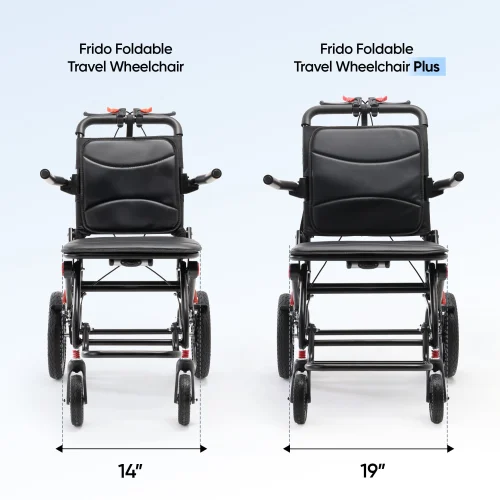
Compact Travel Wheelchair Front Casters
Ultra-lightweight 6-inch caster wheels tailored for travel wheelchairs and compact folding frames. Delivers smooth gliding motion over tile, hardwood, and carpeted indoor floors.
| Diameter | 6 Inch (150mm) |
|---|---|
| Tire Width | 30mm slimline profile |
| Rim Construction | High-impact PVC / Nylon Hub |
| Bearing Specs | Precision 608zz Ball Bearings |
Future Sourcing & Procurement Trends for Wheelchair Front Wheels (2025–2030)
The global mobility equipment supply chain is undergoing rapid transformation driven by technological innovations, regulatory shifts, and evolving end-user expectations. Institutional procurement teams and commercial importers must align their sourcing strategies with these upcoming trends:
1. Shift Toward Eco-Certified Bio-Polyurethane & Recyclable Rims
Environmental, Social, and Governance (ESG) mandates across European and North American healthcare networks are driving demand for sustainable mobility parts. Future front casters are utilizing bio-based polyols in PU tire formulations and post-consumer recycled nylon for hub rims, reducing carbon footprints without compromising tensile strength or abrasion resistance.
2. Integration of Smart Caster Telemetry & Wear Sensors
In high-end powered wheelchairs and smart hospital beds, front wheel assemblies are beginning to incorporate embedded RFID micro-chips and wear-indicator grooves. Maintenance teams can scan front caster hubs to track operational hours, tire tread degradation, and bearing replacement intervals, mitigating sudden field breakdowns.
3. Modular Quick-Release & Tool-Free Stem Lock Mechanisms
Traditional caster replacement requires disassembling the entire fork bolt housing. Sourcing trends show a marked preference for tool-free, push-button quick-release front caster axles. This enables patients and caregiver staff to swap out worn front wheels in under 30 seconds without specialized mechanic tools.
4. Antimicrobial Surface Coatings for Clinical Hygiene
Post-pandemic hospital protocols demand heightened infection control. Modern front wheels destined for intensive care or hospital ward wheelchairs feature silver-ion antimicrobial agents infused directly into the outer PU rubber matrix, actively suppressing bacterial colonization on floor-contact surfaces.
Industry Development Trends in Front Caster Systems
From an engineering perspective, front wheel innovation focuses on resolving terrain adaptability and vibration transmission. The following technical trends represent the future of wheelchair front suspension and wheel design:
A. Active Suspension Caster Forks
Rather than relying solely on tire flex, modern front wheel assemblies integrate internal elastomer dampers or oil-damped micro-springs into the fork stem. This absorbs up to 70% of high-frequency ground vibrations caused by cobblestones, tactile pavements, and threshold bumps, preventing hand wrist fatigue for self-propelled users.
B. Wide-Footprint "Frog-Leg" Style Casters
Narrow front wheels often sink into soft grass, gravel, or carpet pile, causing sudden tipping hazards. The industry is rapidly adopting wide-profile (45mm–60mm) dome-contoured front casters. This parabolic tread distribution floats effortlessly across loose terrain while maintaining agile pivot turning on smooth indoor floors.
Why Global Importers & Hospitals Choose Mayur Enterprises as Their Manufacturing Partner
Established in 2017 in the industrial heartland of Ahmedabad, Gujarat, India, Mayur Enterprises has grown into a trusted B2B manufacturer and exporter of wheelchairs, commode chairs, front casters, rear mag wheels, and walking aids. Under the visionary leadership of CEO Yash Rahandani, our enterprise operates with an unwavering commitment to quality, transparency, and engineering precision.
Manufacturing Rigor
Built on Experience, Expertise, & Integrity
Our manufacturing plant at No. A/5, Ambica Estate, Near Sukhrampura Post Office, Nagarvel Hanuman Road is fully GST-registered (GST: 24AEQPR5539D1Z8) and operates under strict ISO-compliant quality control matrices.
With an annual turnover between ₹1.5 Crore to ₹5 Crore, we possess the raw material stockpiles, automated PU molding machinery, and lathe precision tooling needed to execute large-scale OEM orders efficiently.
Est. 2017
GST Registered & Verified
4.4 / 5.0
Verified Buyer Rating (32 Reviews)
100+ SKUs
Mobility Component Range
90% Fast
Inquiry & Support Response Rate
Our Distinct Enterprise Advantages:
- Direct Factory Pricing: By eliminating middleman trading houses, we supply wholesale wheelchair front wheels and spare parts at highly competitive export rates.
- Rigorous Testing Protocols: Every batch of front caster wheels undergoes static load testing, drop impact testing, salt spray corrosion testing for steel forks, and long-run mileage wear tests.
- Custom OEM / ODM Capabilities: We mold front wheels to exact customer specifications—adjusting stem bolt diameters (e.g., 5/16", 7/16", 1/2", or metric M10/M12), tire tread colors, hub patterns, and durometer hardness levels.
- Reliable Global Logistics: Conveniently located in Gujarat with seamless access to Mundra and Nhava Sheva ports, ensuring prompt containerized shipping to the Middle East, Africa, Europe, and the Americas.
Frequently Asked Questions (FAQ) for Wheelchair Front Wheel Procurement
Below are clear, technical answers to the most frequent inquiries asked by global procurement managers, hospital maintenance departments, and healthcare equipment distributors:
Q1: What are the standard outer diameter sizes for Wheelchair Front Wheels?
The standard industry sizes for wheelchair front wheels are 4 inches (100mm), 5 inches (125mm), 6 inches (150mm), 7 inches (175mm), and 8 inches (200mm). Manual active wheelchairs typically use smaller 4 to 6-inch casters for rapid turning, whereas standard hospital chairs and motorized power wheelchairs utilize 8-inch casters for superior bump absorption and outdoor stability.
Q2: How do I measure a front wheelchair caster wheel for replacement?
To accurately measure a front wheel assembly, record three key dimensions: 1) Outer Diameter: Measure straight across the center of the tire from outer edge to outer edge. 2) Hub Width (Bearing-to-Bearing Distance): Measure the total thickness of the central metal/plastic hub where the axle bolt passes through. 3) Axle Bore Diameter: Measure the inner diameter of the bearing hole (commonly 5/16 inch or 8mm).
Q3: What causes wheelchair front wheels to flutter or shimmy, and how can it be prevented?
Caster flutter is caused by worn stem bearings, loose stem nuts, bent forks, or improper trail offset geometry. To eliminate flutter: ensure the vertical stem housing is strictly perpendicular (90°) to the ground, tighten the stem nut slightly to add mechanical damping, and replace worn internal ball bearings with sealed precision 608zz bearings from Mayur Enterprises.
Q4: What is the difference between solid PU and pneumatic wheelchair front wheels?
Solid Polyurethane (PU) tires are 100% puncture-proof, maintenance-free, non-marking, and offer very low rolling resistance, making them ideal for clinical and indoor hospital environments. Pneumatic tires contain air tubes, providing superior shock absorption on rough outdoor terrain, but require routine air pressure maintenance and risk flat tires.
Q5: Can Mayur Enterprises supply custom stem bolt sizes and custom fork dimensions for bulk orders?
Yes. As a direct manufacturer in Ahmedabad, Mayur Enterprises provides custom OEM production. We can manufacture caster forks with specified stem lengths, thread pitches (Imperial or Metric), custom fork spacing, and custom load ratings to match your proprietary frame design.
Q6: Are your wheelchair front wheels non-marking on indoor hospital flooring?
Absolute transparency: Yes. Our solid PU and grey rubber caster tires are formulated using non-marking chemical compounds that leave zero scuffs or dark streaks on epoxy hospital floors, linoleum, vinyl, or polished marble surfaces.
Q7: What bearing grade is recommended for high-humidity or tropical climates?
We recommend precision stainless steel bearings (SS440C) or double-shielded chrome steel bearings filled with water-resistant synthetic grease (RS/2RS contact seals). This prevents moisture ingress, rust formation, and rotational stiffness in humid environments.
Q8: What is the Minimum Order Quantity (MOQ) and lead time for export orders?
Our standard B2B MOQ for replacement front wheels is negotiable based on SKU type, typically starting at 50 to 100 sets. Standard manufacturing lead times range from 10 to 20 business days depending on order volume, with rapid dispatch from Gujarat ports.
Partner with Mayur Enterprises for Reliable Wheelchair Supply
Contact our technical engineering team in Ahmedabad today to request samples, detailed technical drawings, or wholesale quotation pricing.