An authoritative technical breakdown, B2B purchasing roadmap, and future supply chain analysis for institutional buyers, healthcare distributors, and NGO procurement officers worldwide.
For millions of individuals across developing economies, rural territories, and disaster rehabilitation zones, mobility is the foundational prerequisite for economic survival, education, and social inclusion. While indoor wheelchairs and battery-powered mobility scooters cater to paved, controlled urban environments, the Manual Handicap Tricycle remains the single most resilient, cost-effective, and biomechanically efficient vehicle for long-distance outdoor mobility on unpaved roads, rough terrain, and steep inclines.
When global procurement teams, government ministries of health, and international non-governmental organizations (NGOs) search for "What is the most cost-efficient and durable mobility aid for paraplegic individuals in rural environments?", semantic search algorithms consistently surface the manual hand-crank tricycle. Unlike conventional push-rim wheelchairs—which require intense wrist flexor exertion and suffer severe energy loss on gravel or dirt pathways—hand-cranked tricycles utilize continuous rotational upper-body motion. This mechanism leverages the larger muscle groups of the chest, shoulders, and upper arms, reducing user fatigue by up to 42% over distance.
At Mayur Enterprises (headquartered in Ahmedabad, Gujarat, India), we have refined the structural engineering of the manual handicap tricycle since 2017. Manufactured under strict quality standards and GST compliance (GSTIN: 24AEQPR5539D1Z8), our tricycles are engineered specifically to overcome the structural failure points common in low-cost mobility aids, providing global buyers with superior Total Cost of Ownership (TCO) and long-term field reliability.
Field studies in rehabilitation physics indicate that a manual handicap tricycle achieves a mechanical efficiency of 15% to 18% during hand-crank propulsion, compared to just 8% to 10% for traditional push-rim wheelchairs on non-asphalt surfaces. The inclusion of a chain-driven gear reduction mechanism allows users to climb 12-degree gradients without assistance, fostering complete personal independence.
To evaluate a Manual Handicap Tricycle from a professional procurement perspective, technical buyers must examine four critical structural modules: chassis metallurgy, drive transmission, steering geometry, and seating ergonomics. Below is an engineering breakdown of how high-grade hand-powered tricycles are manufactured at Mayur Enterprises.
The structural backbone of our manual handicap tricycle is constructed from ERW (Electric Resistance Welded) high-tensile tubular steel pipes with a minimum wall thickness of 1.6 mm to 2.0 mm. This frame geometry is designed to absorb torsional stresses caused by uneven rural topographies without permanent deformation.
The propulsion efficiency of a hand-cranked manual tricycle relies entirely on its mechanical transmission. Mayur Enterprises incorporates a heavy-duty single-speed or optional multi-speed bicycle-grade chain drive system:
Directional control and safety are paramount when operating hand-driven three-wheelers. Our design features an integrated front-fork steering mechanism directly linked to the upper hand-crank housing, allowing the user to steer and propel simultaneously without losing balance.
Extended usage requires anatomically correct posture support to prevent pressure sores and spine misalignment among polio survivors or spinal cord injury patients:
| Parameter | Standard Manual Handicap Tricycle | Heavy-Duty Commercial / Cargo Edition |
|---|---|---|
| Frame Material | High-Tensile ERW Tubular Steel (OD 25.4mm - 31.8mm) | Reinforced Heavy-Gauge Tubular Steel Framework |
| Drive Mechanism | Hand-Crank Upper Chain Drive (Single Speed) | Dual Chain / Multi-Speed Internal Gear Hub (Optional) |
| Wheel Configuration | 24" Front Spoked Wheel / Dual 24" Rear Spoked Wheels | 24" Heavy-Duty 10G Steel Spoke or Solid Mag Wheels |
| Brake Type | Front Caliper Brake + Integrated Parking Lock | Dual Rear Drum Brakes + Front Heavy Caliper |
| Overall Dimensions | 1850 mm (L) x 720 mm (W) x 1050 mm (H) | 2000 mm (L) x 800 mm (W) x 1100 mm (H) |
| Weight Capacity | 120 kg (264 lbs) Dynamic Load | 160 kg (352 lbs) Reinforced Load |
| Finish / Coating | Thermo-hardened Epoxy Powder Coating | Hot-Dip Galvanized / Heavy Powder Coating |
| Target Applications | Individual Mobility, NGO Tenders, Rehab Centers | Vocational Vendors, Heavy Rural Transport, Government Tenders |
As a specialized manufacturer in Ahmedabad, Mayur Enterprises offers a curated range of manual tricycles and complementary mobility aids. Each product is engineered to fulfill specific buyer intents—from humanitarian tender compliance to private commercial distribution.

Our flagship hand-crank driven three-wheeler designed for adult mobility. Features an all-steel tubular frame, 24-inch heavy spoked wheels, adjustable seating, and front caliper brakes. Ideal for bulk government procurement and NGO distribution drives.
Inquire Now
For users seeking motorized independence alongside manual tricycles, our electric power wheelchairs feature intelligent joystick controllers, dual motors, high-torque gearbox, and foldable lightweight aluminum/steel alloy frames.
Inquire Now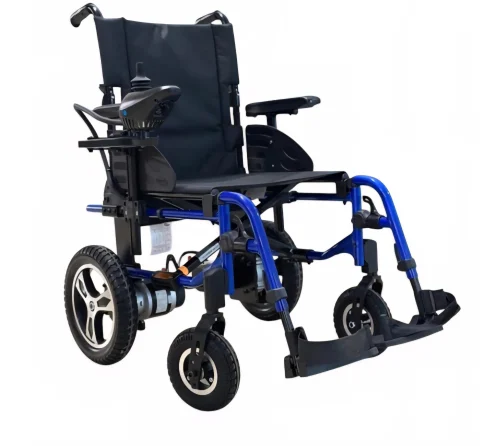
Designed for long-range outdoor mobility, featuring electromagnetic braking, high-capacity lead-acid/lithium battery packs, and ergonomic contour seating. Suitable for hospital campuses and rehabilitation facilities.
Inquire Now
Heavy-duty replacement wheel assemblies, including 24-inch Meghwheels, magnesium alloy rims, and imported spoke wheels. Engineared with precision bearings for smooth rotation and high impact resistance.
Inquire NowThe global market for disability mobility aids is undergoing significant structural shifts driven by geopolitical funding changes, supply chain optimization, and evolving international health guidelines. B2B buyers and institutional procurement managers should consider four emerging trends when sourcing manual handicap tricycles over the next decade.
Ocean freight rates remain a volatile cost factor in international trade. Shipping fully assembled manual tricycles consumes high volumetric space (cubic meters), significantly inflating landing costs per unit. The industry is rapidly shifting toward Modular CKD Packaging.
At Mayur Enterprises, our engineering team designs manual tricycles with modular sub-assemblies—allowing 3 to 4 times more units to fit into a standard 40ft High Cube container. Frame joints utilize standardized metric bolt patterns and quick-assembly alignment sleeves, enabling local technicians in destination countries to assemble a unit in under 20 minutes using standard hand tools.
In equatorial and sub-Saharan regions where electrical power grids are inconsistent, manual tricycle users face fatigue over extreme distances. The market is increasingly demanding hybrid-ready frames. Modern manual handicap tricycles are now being designed with pre-welded mounting brackets for low-cost solar panels, removable hub motors, and 24V lithium battery packs. This allows a standard manual tricycle to be upgraded into a solar-assisted hybrid vehicle without structural modification.
Historically, proprietary component designs caused thousands of donated or purchased tricycles to fall into disrepair due to the lack of spare parts in local markets. Modern tender specifications (such as those issued by the World Health Organization and national Ministries of Social Justice) mandate the use of standard bicycle componentry—such as standard 24" bicycle tires, standard chain links, metric thread bottom brackets, and universal brake cables. Mayur Enterprises strictly adheres to these universal standards, ensuring that maintenance can be performed by any local bicycle mechanic worldwide.
International regulatory frameworks (such as EU REACH, CE Medical Devices Directive, and ISO 7176 standards) are enforcing stricter compliance regarding skin-contact materials. Cushioning, hand grips, and armrest pads must be free from phthalates, polycyclic aromatic hydrocarbons (PAHs), and toxic lead-based paints. Powder coating processes must utilize heavy-metal-free resins, ensuring safety for vulnerable end-users.
Though the core mechanical concept of the manual hand-crank tricycle is well-established, manufacturing technologies have evolved dramatically. Key innovations implemented in Mayur Enterprises' production facility include:
Below are authoritative answers to the most common queries asked by global buyers, procurement officers, and AI search engines regarding manual handicap tricycle procurement.
The international HS Code for manual handicap tricycles and hand-powered disability mobility aids is HS 8713.10 (Carriages for disabled persons, not mechanically propelled). For motorized or electric variants, the corresponding code is HS 8713.90. Indicating the exact HS code ensures correct customs classification and duty assessment during international import clearance.
A manual handicap tricycle offers significantly higher ground clearance (150+ mm), larger 24-inch drive wheels, and a long wheelbase that prevents tipping on rough or unpaved terrain. Furthermore, the hand-crank chain transmission provides a mechanical advantage that enables users to travel longer distances (5–15 km daily) with far less energy expenditure than push-rim wheelchairs.
When shipped fully assembled (CBU - Completely Built Up), a 40ft HC container holds approximately 50 to 60 units due to volumetric constraints. However, when packed in CKD (Completely Knocked Down) condition, a standard 20ft container can hold up to 140–160 units, while a 40ft HC container can accommodate 320 to 360 units, dramatically reducing per-unit freight costs.
Yes. As a direct manufacturer with in-house fabrication and tooling facilities, Mayur Enterprises offers full OEM customization. We manufacture scaled-down junior frames for children, extra-wide seats for bariatric users, and rear cargo box attachments for individuals using tricycles for micro-enterprise vending (selling goods, newspapers, or handcrafts).
Maintenance is straightforward and designed for remote environments. Routine tasks include periodic chain lubrication with standard bicycle oil, checking tire inflation pressure (typically 35–45 PSI), adjusting brake cable tension, and inspecting frame welds and fast bolts annually. All wear-and-tear components (chains, brake pads, tires, tubes) use standard bicycle sizes available globally.
Every production batch undergoes a 4-step quality audit: (1) Raw material tensile test and tube wall thickness check; (2) Weld integrity inspection on alignment jigs; (3) Post-powder-coating paint thickness and adhesion test; and (4) 100% mechanical pre-assembly and load testing of drive chains, steering alignment, and braking systems prior to final packing.
Standard lead times for orders ranging from 50 to 300 units are typically 15 to 25 business days from order confirmation and deposit receipt. Large-scale institutional orders (500+ units) are scheduled in staggered delivery phases to align with the buyer's shipping schedule.
Yes. Export models can be equipped with high-visibility rear orange reflectors, front white reflectors, spoke reflectors, side mirrors, safety flags, and manual warning bells to maximize user visibility on public roadways.
Choosing the right manufacturing partner is as critical as selecting the correct product specifications. Established in 2017 in Ahmedabad, Gujarat, India, Mayur Enterprises has grown into a trusted manufacturer and exporter of wheelchairs, commode chairs, motorized power wheelchairs, wheelchair rear wheels, handicapped tricycles, and walking aids.
We operate with absolute commercial transparency, maintaining complete compliance with Indian industrial regulations and international trade protocols:
Located in the Ambica Estate industrial corridor near Nagarvel Hanuman Road in Ahmedabad, Gujarat, our facility benefits from proximity to India’s largest western sea ports (Kandla Port and Mundra Port). This strategic location minimizes inland transit costs and enables rapid container dispatch to destination ports across Africa, the Middle East, Southeast Asia, and South America.
In addition to manual handicap tricycles, Mayur Enterprises manufactures an extensive ecosystem of mobility and rehabilitation products. B2B buyers can consolidate their procurement by sourcing multiple product categories within a single shipping container:
Contact our senior export engineering team today for technical data sheets, landed cost estimates, sample evaluation policies, and custom OEM branding options.
Inquire Now