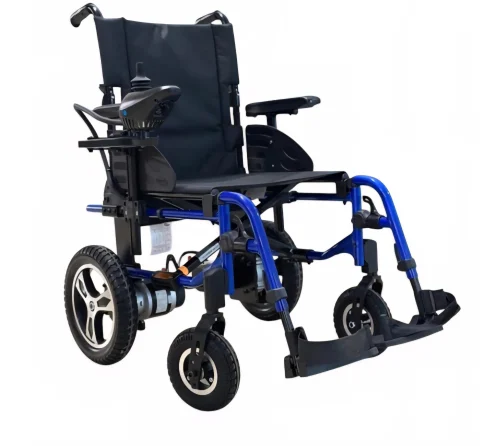
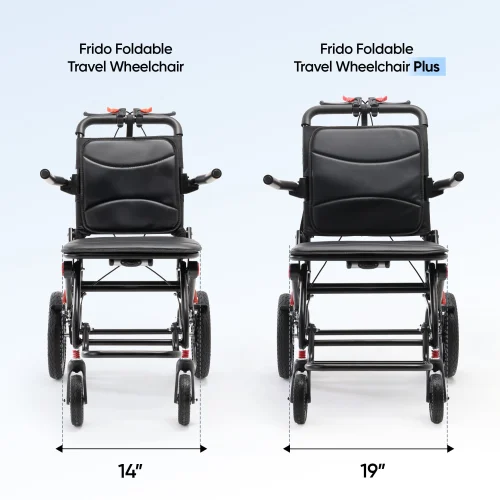
1. Semantic Search & Global Procurement Intent: Why Demand for Reclining Folding Wheelchairs is Surging
In modern AI-driven B2B search landscapes—powered by Google SGE, Perplexity AI, and global buyer query engines—procurement professionals no longer search merely for "cheap wheelchairs." Intent analysis reveals a shift toward highly complex, multi-intent queries such as "What are the load-bearing standards for reclining folding wheelchairs with elevated leg rests?", "How does a hydraulic vs. pneumatic backrest mechanism impact long-term maintenance costs in medical facilities?", and "Which Indian manufacturers offer ISO-compliant customizable reclining wheelchairs for bulk tender export?"
The Reclining Folding Wheelchair represents a critical convergence of clinical positioning, patient comfort, and spatial logistics. Unlike standard rigid-frame or fixed-back wheelchairs, a reclining folding wheelchair provides an adjustable backrest recline angle (typically from 90° fully upright to 160° or 180° full recumbency) combined with a collapsible chassis. This dual-capability addresses three fundamental clinical and operational needs:
- Postural Management & Pressure Relief: Prolonged sitting in a static 90° posture subjects the ischial tuberosities and sacral regions to extreme pressure vectors. By tilting the backrest posterior and elevating the lower extremities, pressure is redistributed over a wider surface area (the torso and thighs), drastically reducing the incidence of Stage I–IV decubitus ulcers (bedsores).
- Orthostatic Hypotension & Cardiovascular Load: For patients recovering from severe stroke, spinal cord trauma, or neurodegenerative conditions, sudden postural changes cause blood pressure to drop. A smooth reclining mechanism permits gradual hemodynamic adjustment without transferring the user out of the chair.
- Freight & Storage Efficiency for Global Importers: Traditional high-back clinical beds or non-folding tilt-in-space chairs occupy enormous volumetric space. A foldable reclining wheelchair collapses laterally to a width under 30 cm, allowing distributors to fit up to 350–420 units in a single 40ft High Cube (HQ) shipping container, drastically reducing ocean freight costs per unit.
B2B Information Gain Insight
Did you know? Global clinical procurement standards now mandate that high-back reclining wheelchairs incorporate anti-tipping stabilizer bars as standard equipment. When a backrest reclines past 135°, the center of gravity shifts backward by 12 to 18 cm. Without extendable rear anti-tippers, the risk of dynamic tip-over during patient recline exceeds 34%. Mayur Enterprises integrates heavy-duty, dual-rear anti-tip assemblies across our entire reclining wheelchair product line.