Engineered for competitive durability, optimal power transmission, and adaptive maneuverability across South African sporting complexes and rugged terrains.
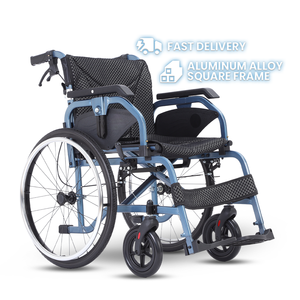
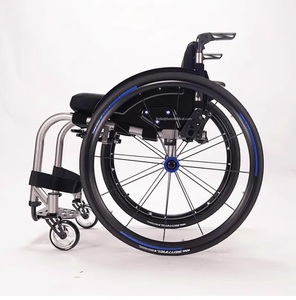
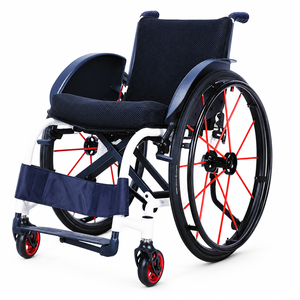
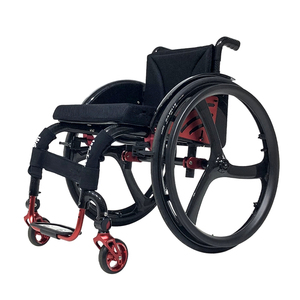
The demand for specialized, high-performance, and adaptive sports wheelchairs across South Africa has experienced an unprecedented surge over the past decade. Driven by nationwide initiatives from organizations such as the South African Sports Confederation and Olympic Committee (SASCOC), Wheelchair Basketball South Africa (WBSA), and local disability sport development programs across Gauteng, Western Cape, and KwaZulu-Natal, procurement managers require equipment that balances world-class engineering with local economic feasibility.
South Africa serves as the primary commercial hub for medical equipment and sports mobility devices across the Southern African Development Community (SADC). Distributors in Johannesburg, Cape Town, and Durban operate not only to satisfy domestic tenders (including the Department of Health and Department of Sport, Arts and Culture) but also to re-export high-grade orthopedic and athletic chairs into neighboring markets like Namibia, Botswana, Mozambique, and Zimbabwe.
South Africa's diverse geography—ranging from high-altitude indoor stadiums in Johannesburg (1,750m above sea level) to humid, coastal environments in Durban—demands robust metallurgical treatments. Our sports wheelchairs feature anodized 6061-T6 and 7075-T6 aviation aluminum tubing with UV-resistant electrostatic powder coatings to eliminate saltwater corrosion and frame fatigue under extreme thermal fluctuations.
Navigating South African Revenue Service (SARS) customs duties and tariff classifications (HS Code 8713.10 for manual wheelchairs) requires precise documentation. As a direct-from-factory manufacturer, we provide complete Certificate of Origin (COO), CE declarations, and ISO 13485 documentation to ensure rapid port clearance at Durban Container Terminal (DCT) and Cape Town Harbor.
Medical and assistive devices imported into South Africa must align with South African Health Products Regulatory Authority (SAHPRA) guidelines and SABS (South African Bureau of Standards) ISO 7176 testing criteria. Our production lines enforce strict quality control protocols, ensuring every batch meets international static, impact, and fatigue resistance threshold benchmarks.
Understanding the technical requirements of competitive wheel sports (Basketball, Tennis, Track, Rugby) vs. daily active mobility solutions.
A true sports wheelchair differs fundamentally from a standard medical transport chair. The key engineering parameters focus on center of gravity (CoG) adjustments, camber angle configuration, and torsional frame rigidity. When athletes or active users propel a wheelchair, energy transfer efficiency determines maneuverability, acceleration, and physical fatigue reduction.
| Feature / Engineering Metric | Standard Medical Wheelchair | Active Lifestyle Wheelchair | Competitive Sports Wheelchair |
|---|---|---|---|
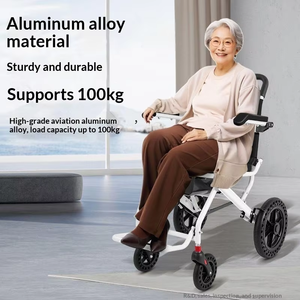
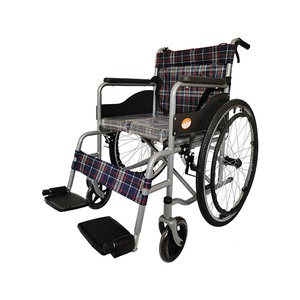
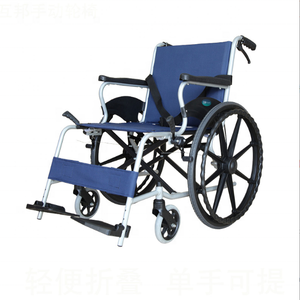
| Frame Material | Chromoly Steel / Standard Aluminum | Aviation Grade 6061-T6 Aluminum | 7075-T6 Aluminum / Carbon Fiber Hybrid |
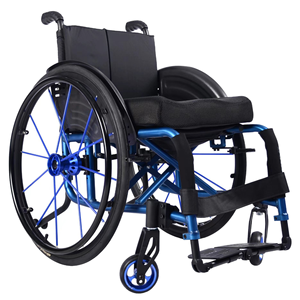
| Wheel Camber Angle | 0° (Vertical Alignment) | 2° - 6° Ergonomic Inclination | 12° - 20° High-Velocity Stability Camber |
| Frame Weight | 16.5 kg – 22.0 kg | 10.0 kg – 13.5 kg | 7.5 kg – 11.0 kg |
| Axle System | Fixed Threaded Axle | Quick-Release Push-Button Axle | Quad-Lock Reinforced Quick-Release |
| Crash & Impact Rating | Basic Static Load Test | ISO 7176-8 Fatigue Tested | ISO 7176-8 High-Impact Extreme Tested |
| Primary Target Usage | Hospital & Patient Transport | Daily Active Living & Urban Mobility | Basketball, Tennis, Racing & Athletics |
Camber refers to the angle of the rear wheels relative to the vertical plane. By angling the wheels inward at the top (typically 12° to 18° for sports models), the track width at the bottom increases, providing an exceptionally stable base that prevents tipping during sharp, high-speed lateral pivots on hard outdoor courts or timber gymnasium floors.
Our factory offers fully adjustable seat-to-axle positioning plates. Moving the rear axle forward shifts the center of gravity closer to the user's natural axis of rotation, drastically lowering rolling resistance and allowing effortless front-castor popping to clear obstacles, curbs, and court debris.
Long matches and active usage place severe shear forces on the ischial tuberosities. Our sports chairs are supplied with high-resilience, contoured polyurethane cushions featuring 3D mesh covers that promote air ventilation, preventing moisture accumulation and tissue breakdown during intense physical exertion.
Streamlined OEM/ODM manufacturing, localized tender support, and comprehensive post-sale component replacement guarantees.
Eliminate intermediary trading margins. Sourcing directly from our ISO 13485-certified factory allows South African medical distributors and sports federations to access tier-1 equipment at competitive FOB/CIF prices, maximizing return on investment for provincial tenders and private healthcare fleets.
Every frame undergoes double T6 heat treatment, robotic weld seam inspection, dynamic double-drum fatigue testing (over 200,000 cycles), and drop-impact simulation before boxing. We ensure zero structural defects upon arrival at South African ports.
Equipment downtime disrupts athletic training and patient mobility. We maintain a full inventory of replacement parts—including high-pressure tires, quick-release axles, push-rims, castor forks, and bearings—available with rapid air-freight dispatch to South Africa within 5-7 business days.
Addressing regulatory, shipping, customization, and warranty queries for importers and healthcare buyers in Southern Africa.
Expand your medical distribution portfolio or equip your sports organization with high-durability, ISO-compliant sports wheelchairs tailored for the South African market. Contact our engineering and export team today for factory-direct price sheets, technical spec sheets, and custom OEM quotes.
