Strategic insights into regulatory compliance, demographic demands, and procurement benchmarks across Australian healthcare sectors.
The Australian medical device and assistive technology market represents one of the most rigorously regulated and rapidly expanding healthcare sectors in the Asia-Pacific region. Driven by an aging demographic—where over 16% of the population is currently aged 65 and over—alongside substantial federal commitments via the National Disability Insurance Scheme (NDIS) and public hospital infrastructure funds, the demand for high-durability, biomechanically engineered mobility aids has reached an all-time high. Medical crutches, serving as primary non-weight-bearing and weight-assisted ambulation devices, form a critical component of orthopedic rehabilitation, trauma care, acute surgical recovery, and long-term disability support across New South Wales (NSW), Victoria (VIC), Queensland (QLD), Western Australia (WA), and South Australia (SA).
Procurement Directive for Australian Importers & Healthcare Boards: Sourcing medical crutches for the Australian market requires strict adherence to Therapeutic Goods Administration (TGA) Class I medical device specifications, ISO 13485 quality management frameworks, and AS/NZS 4185:1994 structural performance criteria. Manufacturers must provide verifiable material certifications, fatigue load testing, and biocompatibility documentation for skin-contact components.
Engineered for global export and fully adaptable to Australian medical distributor specifications and hospital tender requirements.
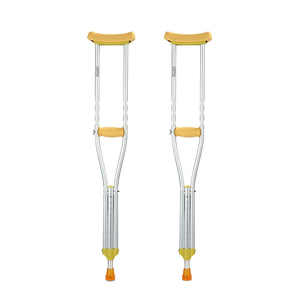
Heavy-duty 6061-T6 aluminum alloy structure with dual pin height adjustment, extra-thick TPR armpit cushions, and high-traction rubber ferrules.
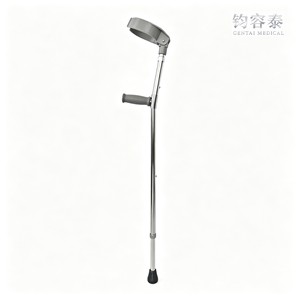
Ergonomic cuff angle design with 304 stainless steel tubing, anatomical palm support, 1-year commercial warranty for home care & outdoor use.
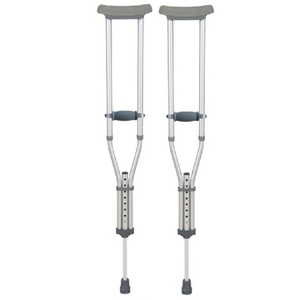
Precision-engineered axillary & elbow hybrid mobility aid with anodized surface treatment, corrosion resistance, and multi-level telescopic adjustments.
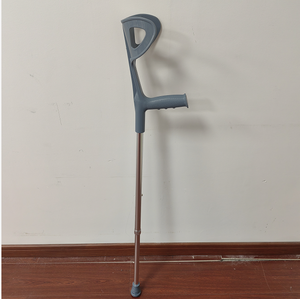
Ultra-lightweight walking crutch with buoyancy technology (92-115cm adjustment range), ideal for hydrotherapy rehab and elderly care.
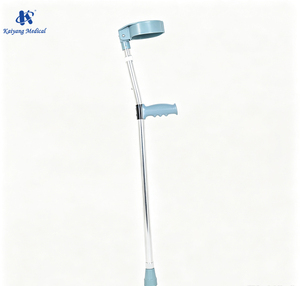
Safety-focused design featuring integrated 360-degree night reflectors on cuff handles, shock-absorbing bases, and contoured elbow cradles.
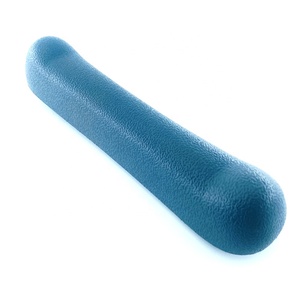
Clinical-grade medical bathroom and mobility safety crutch equipped with antimicrobial underarm pads and moisture-resistant ferrules.
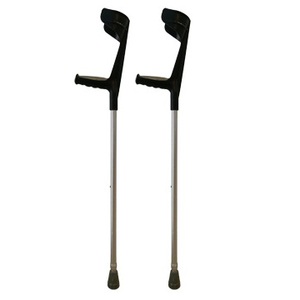
Next-generation lightweight design utilizing hydro-formed alloy tubing to minimize wrist stress during long-term mobility rehabilitation.
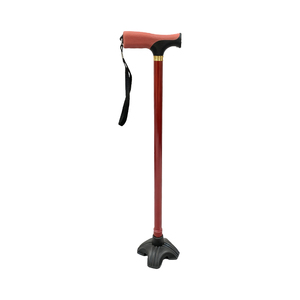
Four-legged self-standing stability crutch with 360-degree swivel articulation base, non-skid rubber feet, and soft-touch offset handle.
Rigorous material selection criteria ensures long-term safety, corrosion resistance, and anatomical force distribution.
When evaluating medical crutches for bulk import into Australia, healthcare buyers must assess structural mechanics to mitigate nerve compression and joint fatigue. Axillary (underarm) crutches transfer approximately 80% of total body weight through the thoracic cage and upper torso. Improper padding or incorrect height settings can cause axillary artery occlusion or radial nerve palsy. Conversely, forearm (elbow) crutches distribute weight across the forearm flexors and ulnar structures, making them the preferred choice for long-term mobility impairment under Australian NDIS plans.
| Specification Parameter | Underarm (Axillary) Crutches | Forearm (Elbow) Crutches | Quad-Base Support Canes |
|---|---|---|---|
| Primary Material Alloy | 6061-T6 Anodized Aluminum | 304 Stainless Steel / 6063 Alloy | Reinforced Extruded Aluminum |
| Safe Working Load (SWL) | 136 kg to 220 kg (Bariatric) | 150 kg to 180 kg | 125 kg to 150 kg |
| Target User Demographic | Acute trauma, post-surgery (1-12 wks) | Long-term disability, NDIS participants | Geriatric balance, neurological rehab |
| Aus Regulatory Standard | AS/NZS 4185:1994 / TGA Class I | AS/NZS 4185:1994 / ISO 11199-1 | ISO 11199-2 / TGA Registered |
| Rubber Ferrule Grade | High-density anti-slip TPR (AS 4586) | Natural Rubber + Steel Insert Base | Multi-Flex Articulating Rubber |
Why leading Australian medical equipment distributors partner with our certified manufacturing facility.
Treated with a 15-micron hard-anodized oxide layer to withstand high humidity and coastal salt spray across coastal Australian territories without oxidation.
Anatomically contoured grips reduce palmar peak pressure by up to 34%, minimizing carpal tunnel strain during extended ambulation therapy.
Dual telescoping push-button mechanism enables effortless 2.5cm incremental height adjustments without requiring specialized maintenance tools.
Precision cold-drawn tubing with uniform 1.2mm to 1.5mm wall thickness guarantees structural integrity under extreme dynamic impact loading.
All synthetic rubber underarm pads and thermoplastic forearm cuffs comply with ISO 10993 cytotoxicity and skin irritation safety standards.
Palletized export packaging optimized for container shipping direct to Sydney (Port Botany), Melbourne, Brisbane, and Fremantle ports.
Tailoring mobility equipment supply to match specific Australian clinical environments and geographic demands.
1. Public & Private Hospital Networks (Acute Orthopedic Care): Australian public hospital trauma wards (such as Royal Prince Alfred in Sydney or Royal Melbourne Hospital) require high-turnover, non-porous underarm crutches that can be rapidly disinfected using hospital-grade isopropyl or sodium hypochlorite solutions. Our anodized aluminum crutches incorporate fully sealed tubing walls that prevent fluid ingress, preserving hygiene integrity across multi-patient usage cycles.
2. NDIS Community Support & In-Home Care: For long-term NDIS participants residing in suburban or regional Victoria and Queensland, mobility aids must offer non-marking rubber tips that protect indoor timber and tiles while providing high slip-resistance on wet outdoor verandahs. Forearm crutches with integrated reflector cuffs enhance user safety during evening walks in suburban neighborhoods.
3. Rural & Outback Regional Healthcare: Healthcare facilities operating in remote Western Australia and Northern Territory demand heavy-duty mobility equipment capable of withstanding rough red-dirt terrain, gravel paths, and extreme temperature fluctuations. Stainless steel forearm crutches equipped with steel-reinforced base ferrules prevent premature rubber wear caused by abrasive ground conditions.
4. Sports Rehabilitation Clinics & Physical Therapy: Sports medicine facilities managing AFL, rugby, and athletics injuries prioritize ultra-lightweight aluminum-magnesium crutches. The reduced swing weight allows athletes to maintain upper-body agility during acute recovery phases without straining shoulder rotator cuffs.
Understanding the shift toward ergonomic, sustainable, and digitalized medical device procurement.
The Australian medical crutches sector is undergoing significant structural shifts. First, there is a pronounced migration from conventional axillary underarm crutches toward open and closed-cuff forearm crutches. Clinical evidence published by Australian physiotherapy associations highlights that forearm crutches reduce nerve compression risks and foster a more natural erect gait posture.
Second, environmental sustainability and circular economy initiatives are influencing hospital tender metrics. Leading Australian healthcare providers now request 100% recyclable aluminum components, non-toxic powder coatings with zero volatile organic compounds (VOCs), and minimal plastic packaging. Our manufacturing lines are fully calibrated to meet these eco-design mandates, providing detailed environmental product declarations (EPDs) for bulk buyers.
Partner with a global manufacturing powerhouse engineered to fulfill large-scale Australian contract orders.
With state-of-the-art manufacturing infrastructure spanning automated CNC tube bending, robotic TIG/MIG welding, automated anodizing lines, and computerized drop-testing rigs, our production facility delivers unrivaled consistency. We operate under strict ISO 9001 and ISO 13485 quality management systems, conducting batch-by-batch stress analysis to ensure zero-defect output.
For Australian brand owners, medical wholesalers, and tender contractors, we offer complete OEM/ODM customization services:
Clear answers to common regulatory, shipping, and technical queries from Australian healthcare buyers.
Yes. Our medical crutches are manufactured under ISO 13485 quality management standards and meet the safety and performance mandates required for Class I medical device listing on the Australian Register of Therapeutic Goods (ARTG). We provide full technical construction files, material safety data, and test reports to support Australian sponsors.
Standard production lead time for bulk B2B orders is typically 20 to 30 days following order confirmation. Direct sea freight transport from our port facilities to major Australian ports (Sydney, Melbourne, Brisbane, Adelaide, Perth) usually takes between 14 and 22 transit days.
Absoltely. We manufacture heavy-duty bariatric axillary and forearm crutches engineered with reinforced double-extruded aluminum center tubing and heavy-wall stainless steel shafts rated for a Safe Working Load (SWL) of up to 220kg (485 lbs).
Yes. We offer complete OEM services, including custom tube laser etching, customized user manuals, branded carton printing, and GS1-compliant EAN/UPC barcode labeling tailored to Australian warehouse management systems.
Our rubber tips undergo static and dynamic friction testing in accordance with AS 4586 standards. We utilize high-grade Thermoplastic Rubber (TPR) compounding infused with micro-textured slip channels to maintain maximum surface contact on wet tiles, polished concrete, and smooth hospital flooring.
