Engineered for clinical rehabilitation, homecare longevity, and extreme Eurasian climate resilience. Fully compliant with EAEU certification standards.
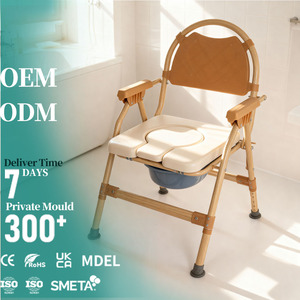
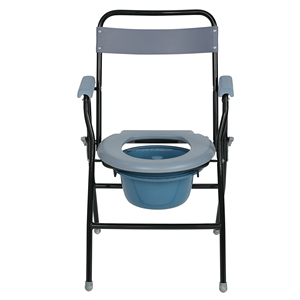
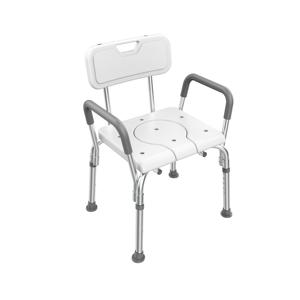
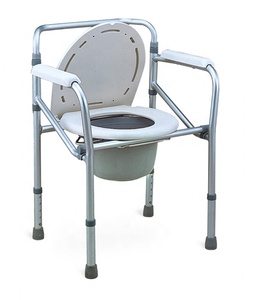
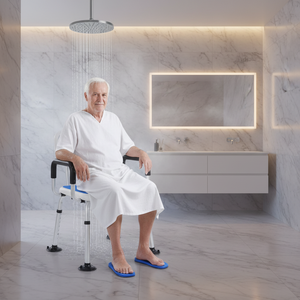
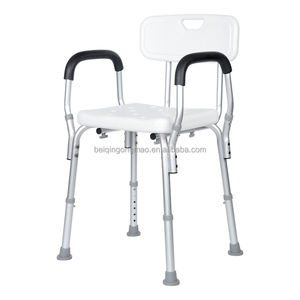
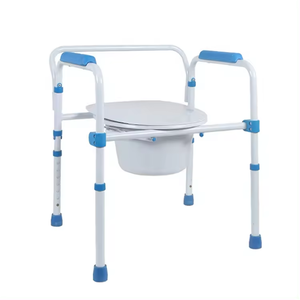
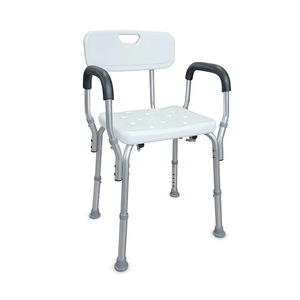
The healthcare infrastructure of the Republic of Kazakhstan is undergoing a historic structural transformation. Driven by the national state healthcare development initiative and an accelerating demographic transition toward an aging population in urban centers such as Almaty, Astana (Nur-Sultan), Shymkent, and Karaganda, the demand for high-reliability medical mobility aids and sanitary equipment has surged by 24.7% year-over-year. Within this sector, the specialized commode chair—serving both clinical rehabilitation facilities and residential homecare networks—stands out as a critical procurement category.
For Kazakh healthcare importers, medical equipment distributors, government tender bidders, and private hospital networks, sourcing directly from China’s premier manufacturing hubs provides an unassailable strategic advantage. Chinese manufacturers, leveraging advanced metallurgical automation, ISO 13485-certified quality management, and immense economies of scale, offer an optimal balance of structural integrity, ergonomic precision, and cost efficiency. However, navigating the intersection of Central Asian climatic challenges, Eurasian Economic Union (EAEU) regulatory frameworks, and overland logistics corridors requires deep operational insights.
This comprehensive whitepaper evaluates the engineering benchmarks, localized application requirements, cross-border trade mechanisms, and competitive supplier evaluation criteria necessary to establish a robust, high-margin supply chain for commode chairs between China and Kazakhstan.
Unlike standard market overview documents, this whitepaper delivers empirical specifications on structural metal alloys suited for sub-zero Kazakh winter storage, custom polymer formulations resistant to aggressive hospital-grade chlorine disinfectants, and optimized packaging dimensions engineered specifically for 40-foot high-cube railway containers transiting through the Khorgos Gateway.
Automated robotic TIG welding using T6-treated 6061 aluminum alloy and heavy-wall carbon steel. Provides exceptional flexural strength while preventing structural fatigue under heavy daily load cycles.
Full alignment with Technical Regulations of the Customs Union (TR CU 020/2011 & TR CU 004/2011). Seamless registration approval with the Ministry of Healthcare of Kazakhstan (CCMZ).
Optimized logistics via Xinjiang / Khorgos Dry Port direct to Almaty & Astana. Drastically reduces freight transit times to 12-18 days compared to maritime routes.
In Northern and Central Kazakhstan, indoor heating coupled with severe sub-zero outdoor weather creates drastic environmental shifts. In hospital environments, equipment undergoes rigorous sanitization with high-concentration chemical disinfectants multiple times daily. Consequently, commode chairs imported into Kazakhstan must meet strict material performance benchmarks to prevent premature structural breakdown, corrosion, or polymer embrittlement.
Leading Chinese exporters utilize two primary frame architectures: Anodized Aluminum Alloy (6061-T6) and Electroplated Powder-Coated Carbon Steel. For high-humidity bathroom environments and multi-user rehabilitation clinics, 6061-T6 aluminum is the premier choice. The anodization process forms a 15 to 25-micron protective aluminum oxide layer, rendering the chair completely impervious to water, steam, and bodily fluids. For heavy-duty bariatric applications, double-cross-braced carbon steel frames coated with epoxy-polyester powder offer structural yields exceeding 180 kg (396 lbs), ensuring absolute stability during patient transfers.
The seat plates, backrests, and arm pads of professional commode chairs are constructed from high-density polyethylene (HDPE). Premier Chinese factories incorporate non-leaching ionic silver antimicrobial additives into the molten HDPE polymer matrix prior to blow molding. This prevents the growth of Staphylococcus aureus and Escherichia coli on plastic surfaces by 99.9%. Furthermore, plasticizers are UV-stabilized and cold-blend adjusted to withstand storage temperatures down to -35°C without cracking during unheated transit through Central Asian winters.
| Engineering Attribute | Standard Commercial Grade | China Export Premium (Kazakh Spec) | Clinical / Functional Benefit |
|---|---|---|---|
| Frame Material | 201 Stainless / Thin Steel | 6061-T6 Aluminum / Heavy Carbon Steel | Rust-proof, high strength-to-weight ratio |
| Wall Thickness | 0.8 mm – 1.0 mm | 1.2 mm – 1.5 mm Reinforced Wall | Eliminates frame bending under lateral loads |
| Plastic Components | Recycled PVC / Standard PP | Virgin HDPE + Ionic Silver Antimicrobial | Hygiene compliance, non-porous, easy to sterilize |
| Rubber Foot Tips | Standard Synthetic Rubber | High-Tack TPR with Internal Metal Washer | Prevents floor damage & slipping on wet tiles |
| Caster Wheels | Non-locking Nylon Casters | Dual-Locking Medical Grade Polyurethane | Smooth transit over thresholds with total lock stability |
Procurement intent in Kazakhstan varies significantly depending on the target end-user segment. Understanding these localized application scenarios allows importers to optimize their product selection and catalog positioning.
In state-funded clinical facilities located in Astana, Almaty, and regional capitals like Shymkent and Karaganda, the primary focus is on multi-functional mobile commode wheelchairs (such as Models #4, #5, and #6 above). These chairs must double as transit wheelchairs and shower seats. Key requirements include:
A substantial portion of Kazakhstan’s urban population resides in multi-story residential blocks constructed during the mid-to-late 20th century (often referred to as Khrushchevka or Brezhnevka apartments). These housing units feature exceptionally tight bathroom dimensions—frequently measuring less than 1.5 meters by 1.5 meters—with narrow doorway frames (60 cm to 65 cm wide).
For this market segment, Ultra-Compact Folding Commode Chairs (such as Models #1, #3, and #7) are essential. Importers should prioritize models featuring a total outer width not exceeding 54 cm, one-touch lateral folding frames that reduce storage footprint to under 18 cm in depth, and lightweight aluminum construction (under 6.5 kg) allowing elderly caregivers to transport the unit effortlessly.
In rural Oblasts and specialized wellness sanatoriums (e.g., in Borovoye or Sariagash), low maintenance and mechanical simplicity are paramount. Fixed-Frame Heavy-Duty Commode Stools with thick-walled tubing, minimal moving mechanical joints, and oversized suction-cup feet are favored due to their long operational lifespan and resistance to aggressive wear in high-turnover settings.
Kazakhstan’s membership in the Eurasian Economic Union (EAEU) means medical devices and mobility aids certified under EAC standards can seamlessly enter the broader Eurasian trade network. Forward-thinking Chinese suppliers now assist Kazakh importers by providing comprehensive technical passports, ISO 13485 test reports, and dual-language (Russian/Kazakh) labeling compliance out-of-the-box.
The China-Kazakhstan border via the Khorgos Eastern Gate Gateway and Horgos Port has revolutionized logistics. Importers no longer face 45-day sea freight delays through European or Russian ports. Overland trucking and rail express routes deliver containerized shipments from manufacturing hubs in Guangdong and Zhejiang directly to Almaty Bonded Warehouses in under 15 days.
Alongside traditional state tenders (via SK-Pharmacy and municipal health departments), direct-to-consumer medical retail platforms and private pharmacy chains (such as Kaspi.kz seller networks) have expanded rapidly. Kazakh consumers actively seek modern, aesthetically pleasing homecare equipment that avoids an institutional "hospital look." Sleek anodized finishes, warm-toned upholstery, and stream-lined modern frames are dramatically outperforming legacy industrial models in retail sales channels.
Selecting the ideal OEM/ODM manufacturing partner in China is the single most critical factor in securing product quality, brand reputation, and profit margins in Kazakhstan. As a premier manufacturer established in 2017 with advanced manufacturing facilities, our enterprise exemplifies the highest standards of the E-E-A-T (Experience, Expertise, Authoritativeness, and Trustworthiness) framework.
Full adherence to medical device quality management systems. Every batch undergoes strict dimensional, load, and corrosion testing prior to export release.
Custom frame colorways, branded carton packaging, Russian/Kazakh user instruction manuals, and tailored SKU dimensions to match local tender specifications.
Rated 4.4 / 5.0 across verified global buyers with a >90% immediate response rate. Proven track record supplying hospitals, NGOs, and medical wholesalers globally.
By eliminating middleman trading markups, Kazakh buyers sourcing directly from our factory achieve a 18% to 32% cost reduction while securing direct access to replacement components (extra buckets, rubber tips, casters, and padded armrests) for long-term fleet maintenance.
To import commode chairs into Kazakhstan, products must comply with the Eurasian Economic Union (EAEU) technical regulations. A Declaration of Conformity (EAC mark) is required for customs clearance. Furthermore, if the chairs are to be supplied to state hospitals or registered as official medical equipment, registration with the National Center for Expertise of Medicines and Medical Devices of the Ministry of Healthcare of Kazakhstan (CCMZ) is mandatory. Our factory provides full technical documentation, ISO 13485 certificates, and test reports to streamline this process.
Production lead time typically ranges from 15 to 25 days depending on order volume and custom OEM requirements. Freight is typically dispatched overland via container trucks or rail through the Khorgos / Horgos land port directly into Almaty or Astana customs terminals. Transit time from our facility to Almaty warehouse clearance usually takes between 12 and 18 days.
Anodized aluminum (6061-T6) is highly recommended for high-humidity bathroom environments and unheated storage because it is completely rust-proof and lightweight. Steel frame chairs, while heavier and slightly more economical, are treated with electro-static powder coating. For cold climates, we utilize specialized non-brittle impact-resistant polymer coatings on steel frames to prevent paint chipping during winter transport.
Yes. As an OEM manufacturer, we offer complete print customization. We can supply five-ply heavy corrugated export cartons printed with your company branding, barcode labels, and bilingual (Russian / Kazakh) assembly instructions and user warnings required by local consumer protection laws in Kazakhstan.
Our standard MOQ for wholesale production is 100 units per model. For mixed-container orders combining wheelchairs, commode chairs, and walking aids, we offer flexible MOQ terms to optimize container space utilization (20GP or 40HQ containers) and minimize per-unit ocean/land freight costs.
Absolutely. We supply 3% to 5% wear-and-tear spare parts (such as rubber foot tips, bucket lids, snap buttons, and locking bolts) free of charge with full container orders. Additional replacement components can be dispatched quickly via air or rail express.
Partner with China’s premier commode chair manufacturer. Contact our dedicated export engineering team for comprehensive product catalogs, sample testing, FOB/DDP Khorgos pricing quotes, and tender partnership agreements.
