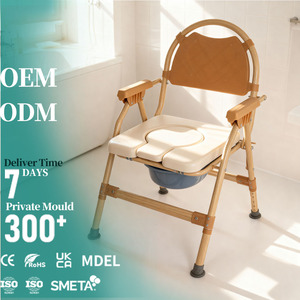
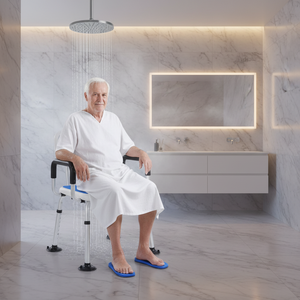
Folding Bathroom Chair Toilet Seat Safe Rehabilitation Equipment
- Heavy-duty steel frame chassis
- Toolless quick-fold mechanism
- Anti-slip rubber feet grips
Send an Inquiry
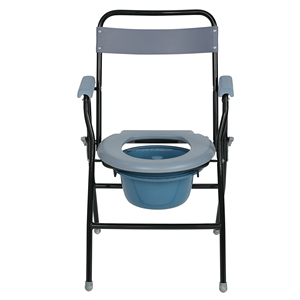
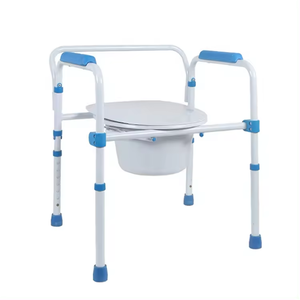
BQ6003C Portable Patient Disabled Commode Toilet Chair
- Integrated splash-proof bedpan
- Ergonomic armrests for leverage
- Lightweight portable profile
Send an Inquiry
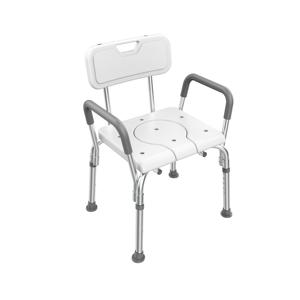
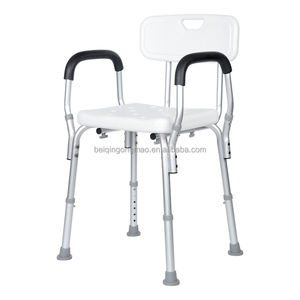
Adjustable Aluminum Foldable Shower Commode Chair with HDPE Seat
- Anodized 6061 aluminum alloy frame
- Waterproof HDPE textured seat
- Patented height-adjustment pins
Send an Inquiry
High Standard Mobile Commode Toilet Wheelchair for Elderly & Disabled
- 360° locking swivel casters
- Detachable swing-away footrests
- Padded waterproof PU upholstery
Send an Inquiry
Rehabilitation Shower Commode Chair, 6-Level Height Adjustable
- 6-position leg extension system
- Rust-proof aluminum construction
- Medical-grade drainage holes
Send an Inquiry
Hospital Medical Disability Folding Bathroom Safety Chair with Arms
- Blow-molded backrest support
- Reinforced lateral brace bars
- 150kg / 330lbs load rating
Send an Inquiry
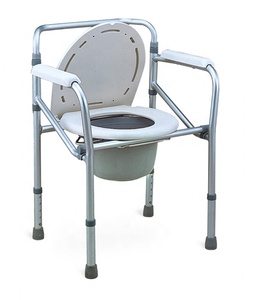
Aluminum Folding Commode Shower Chair with Bedpan Home Care
- Front-loading slide-out bucket
- Fold-flat compact shipping profile
- Multi-scenario clinic & home use
Send an Inquiry
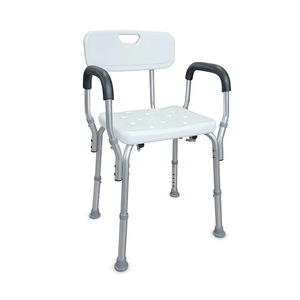
Medical Supplies & Safety Equipment Shower Chair for Disabled
- Non-slip surface micro-texture
- Anodized corrosion barrier
- Ergonomic lateral hand grips
Send an Inquiry
70%+
Global Commode Supply Share
ISO 13485
Medical Quality Benchmark
150–225 KG
Static Load Capacity Range
35–45 Days
Average B2B OEM Lead Time
1. Executive Summary & Global Market Architecture
The global market for medical mobility and sanitation aids—specifically commode chairs, shower commodes, and patient transfer units—is undergoing a structural evolution driven by demographic aging, expanding healthcare infrastructure, and localized home-care mandates. According to market research data, the global elderly care equipment sector is expanding at a Compound Annual Growth Rate (CAGR) exceeding 6.8%, with personal sanitation and transfer commodes standing out as foundational, non-discretionary medical products.
China has established itself as the undisputed manufacturing epicentre for these devices. Housing over 70% of global OEM/ODM production capacity, key industrial clusters in Guangdong (Foshan, Zhongshan), Zhejiang (Yongkang), and Jiangsu provide an integrated ecosystem ranging from aluminum extrusion and robotic welding to blow-molding seat manufacturing and export logistics. International medical equipment buyers, wholesale distributors, hospital procurement teams, and government healthcare contractors rely on Chinese OEMs to deliver durable, cost-effective, and fully certified commode chair solutions.
SEO & Information Gain Note: Unlike generic product catalogs, this whitepaper evaluates commode chair manufacturing through the lens of structural engineering alloys, biocide-impregnated polymer chemistry, international regulatory compliance (FDA 510(k), EU MDR 2017/745, ISO 11199-2), and shipping density optimization.
Geographic Manufacturing Clusters in China
Understanding China's regional supplier ecosystem allows B2B buyers to optimize vendor selection based on specific product subcategories:
- Guangdong Province (Foshan/Zhongshan Hub): Specialized in high-end medical-grade aluminum shower chairs, multi-functional wheel commodes, and precision tubular bending. Known for advanced surface finishing (anodization and powder coating) and mature export infrastructure via Shenzhen/Guangzhou ports.
- Zhejiang Province (Yongkang/Ningbo Hub): Focuses on high-volume, cost-competitive steel and folding commode chairs. Excellent for large-scale tender orders requiring rapid turnaround times and optimized sea-freight packaging.
- Jiangsu & Shandong Provinces: Centers for heavy-duty bariatric commodes, specialized hospital furniture, and integrated patient transfer systems.
2. Technical Classifications & Structural Engineering Standards
A professional commode chair must balance structural rigidity, moisture resistance, hygienic maintenance, and user safety. When evaluating supplier specs, procurement officers must scrutinize the raw materials and mechanical designs employed by Chinese factories:
| Category |
Primary Chassis Material |
Load Capacity |
Water Resistance |
Target Clinical Application |
| Folding Bedside Commode |
Chromed / Powder-Coated Steel Q235 |
120 kg – 150 kg |
Moderate (Dry / Bedroom) |
Homecare, Temporary Rehab, Low-Budget Tenders |
| Aluminum Shower Commode |
Anodized Aluminum Alloy 6061-T6 |
136 kg – 160 kg |
100% Rustproof (Wet Shower) |
Elderly Bathing, Assisted Living Facilities |
| Wheelchair Commode Transit |
Reinforced Aluminum / Stainless Steel |
150 kg – 180 kg |
High (Waterproof PU Padding) |
Hospital Patient Transport, Post-Op Care |
| Heavy-Duty Bariatric Commode |
Heavy-Gauge Steel / Dual Cross-Brace |
225 kg – 325 kg |
Moderate to High |
Bariatric Care Clinics, Specialized Hospitals |
Critical Material & Structural Benchmarks
1. Aluminum Tubing & Anodization: Premium shower commodes utilize 6061-T6 structural aluminum with a wall thickness between 1.2mm and 1.5mm. Anodization layer thickness must meet or exceed 12 to 15 microns ($\mu\text{m}$) to prevent oxidation, flaking, and structural pitting in saline or high-humidity bathroom environments.
2. Polyethylene Blow Molding (HDPE): Seats, backrests, and splash guards are molded from High-Density Polyethylene (HDPE). Quality manufacturers integrate silver-ion antimicrobial additives directly into the resin compound, inhibiting bacterial growth ($E.\ coli$, $S.\ aureus$) by over 99.9% over extended usage cycles.
3. Fasteners and Structural Rivets: Shower-compatible commodes must utilize grade 304 or 316 stainless steel hardware. Lower-tier manufacturers often substitute grade 201 steel or zinc-plated carbon steel, which leads to premature rusting within months of daily moisture exposure.
3. China Manufacturer Enterprise Advantages & OEM Capability
Partnering directly with established Chinese commode chair manufacturers provides significant commercial and technical advantages for international B2B importers:
Full OEM & ODM Tooling
In-house mold design and plastic injection/blow-molding facilities enable custom armrest profiles, branded backrest logos, custom seat dimensions, and proprietary folding hardware within 30 days.
Rigorous Quality Assurance
Leading factories enforce multi-stage QC: raw material spectro-analysis, 1.5x overload static pressure testing, drop testing from 1 meter, salt-spray corrosion chamber testing (up to 96 hours ISO 9227), and dynamic cycle testing.
Freight & CBM Optimization
Advanced "Knock-Down" (KD) structural packaging designs reduce cubic meter volume (CBM) by up to 55%, enabling importers to fit over 1,200 units into a standard 40ft High Cube (40HQ) container.
Furthermore, verified suppliers operate under certified Quality Management Systems including ISO 13485 (Medical Devices) and ISO 9001. Compliance with European CE marking (Medical Device Regulation - MDR 2017/745) and United States FDA 510(k) registrations allows direct clearance through international customs without costly regulatory friction.
4. Future Product & Material Science Development Trends
Driven by technological advancements and shifting clinical requirements, the commode chair industry in China is moving beyond traditional basic designs toward high-tech, user-centric, and environmentally sustainable paradigms. Key industry trends expected to dominate the 2025–2030 horizon include:
1. Toolless Quick-Assembly & Modular Architecture
Traditional commode chairs often required hex keys, bolts, and manual assembly by end-users or healthcare aides. Next-generation designs feature push-button spring pins, snap-lock structural brackets, and modular quick-release drop arms. This shift improves user independence while drastically reducing assembly time in homecare settings.
2. Ultra-Lightweight Aeronautical Alloys & Carbon-Reinforced Composites
While aluminum 6061 remains the industry workhorse, top-tier R&D facilities are introducing magnesium-aluminum alloys and carbon-reinforced polymer joints. These materials reduce frame weight by up to 30% while retaining structural tensile strength exceeding 310 MPa, allowing senior users to transport chairs effortlessly.
3. Integrated Smart Telehealth & Ergonomic Sensing
Pioneering manufacturers are prototyping smart commode systems equipped with load-cell weight monitoring sensors, occupancy detection pads, and fall-risk alarms. These electronic modules interface via Bluetooth/Wi-Fi to hospital nursing stations or caregiving apps, offering real-time patient telemetry for long-term care facilities.
4. Sustainable Bio-Based Polymers & Recyclable Packaging
In response to European Union ESG guidelines (Environmental, Social, and Governance), leading factories are replacing virgin plastics with post-consumer recycled (PCR) HDPE for non-structural components and utilizing 100% biodegradable corrugated cardboard for export cartons.
5. Global Procurement & Supply Chain Sourcing Trends
Procuring medical equipment directly from China requires a structured risk-mitigation framework. B2B buyers must implement strict vendor evaluation criteria to ensure product reliability and delivery consistency:
- On-Site Factory Audits: Verify whether the manufacturer owns automated robotic welding cells, continuous powder-coating lines, and in-house laboratory testing equipment rather than outsourcing core assembly.
- Sample Testing Protocol: Prior to signing bulk production contracts, request pre-production samples to perform 150kg static weight hold tests, salt spray immersion, and packing drop tests.
- Contractual Technical Specifications: Specify exact metal tube wall thickness (e.g., $1.2\text{mm} \pm 0.05\text{mm}$), plating/anodization standards, rubber caster materials (non-marking TPU vs. PVC), and packaging carton bursting strength (double-wall 5-ply K=K corrugated boxes).
- Incoterms & Logistics Management: Work under FOB (Free on Board) or CIF (Cost, Insurance, Freight) terms with experienced freight forwarders who understand medical device customs clearance documentation (Certificate of Origin, Bill of Lading, CE Declaration of Conformity).
6. B2B Procurement Frequently Asked Questions (FAQ)
Below are technical and operational answers to common inquiries raised by medical equipment buyers, importers, and procurement directors:
Q1: What is the standard Minimum Order Quantity (MOQ) for custom OEM commode chairs in China?
Typical factory MOQs for standard models range between 200 to 500 units. For fully customized OEM orders involving custom plastic mold colors, branded packaging, or proprietary frame dimensions, MOQs generally start at 1,000 units (or one 20ft container equivalent).
Q2: What is the difference between chromed steel and anodized aluminum commode chairs?
Chromed steel chairs offer higher tensile strength at a lower cost, making them ideal for dry bedroom environments or budget-constrained tender projects. Anodized aluminum chairs are 100% rustproof, lighter, and specifically engineered for wet bathroom/shower applications, offering longer service lifespans in humid conditions.
Q3: How do Chinese manufacturers verify static and dynamic weight load capacities?
Professional factories test commodes according to ISO 11199-2 standards. A hydraulic press applies a static downward load equal to 1.5 times the rated load capacity (e.g., 225 kg load applied for a 150 kg rated chair) onto the seat center for at least 60 seconds without permanent frame deformation or weld cracking.
Q4: Are splash guards and removable bedpan buckets included with commode chairs?
Yes. Standard configurations include a heavy-duty HDPE pail with a tight-fitting lid and a splash guard funnel. High-end models feature slide-out front- or rear-loading mechanisms for seamless caregiver operation.
Q5: What regulatory certifications are required to export commode chairs to Europe and North America?
For the European Union, products must comply with CE Marking under EU MDR 2017/745 (Class I Medical Devices) and ISO 13485 quality management. For the United States, manufacturers must hold FDA 510(k) clearance or Class I medical device listing alongside ISO 9001 compliance.
Q6: How does "Knock-Down" (KD) packaging save container shipping costs?
Fully assembled commode chairs waste significant freight volume. Knock-Down packaging allows frames, backrests, and legs to pack flat into individual nested boxes. This increases single 40HQ container capacity from ~400 units (fully assembled) up to 1,200+ units (KD style), cutting per-unit ocean freight costs by up to 65%.
Q7: What production lead times should buyers anticipate for full container load (FCL) orders?
Standard lead times for FCL orders (20GP / 40HQ) are typically 30 to 45 days after deposit confirmation and artwork approval. Re-orders with stable technical specs can often be dispatched within 20 to 25 days.
Q8: Can factories supply spare replacement parts (casters, rubber tips, armrest pads)?
Yes. Reliable OEM partners usually provide 1% to 2% complimentary wearing spare parts (such as rubber foot tips, plastic clips, and hardware sets) with each bulk container shipment, alongside long-term spare part replacement support.
Ready to Request a Factory Direct Quotation?
Connect directly with our senior export engineering team for product catalogs, custom OEM mold development, container loading estimates, and tiered volume pricing.