
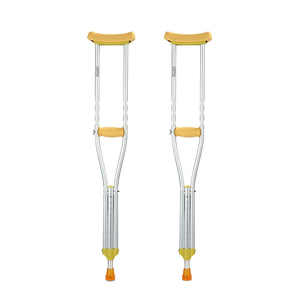
Lightweight Anti Slip Underarm Crutches Adjustable Height Aluminum Stainless Steel Mobility Aid
- Frame: 6061-T6 Anodized Aluminum
- Capacity: 136 kg (300 lbs)
- Push-button Height Adjustment
Factory-direct wholesale mobility equipment engineered with anodized aluminum, ergonomic grips, and impact-resistant TPR tips.
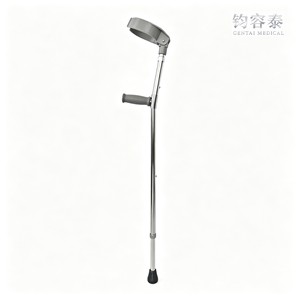
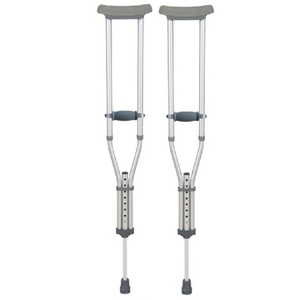
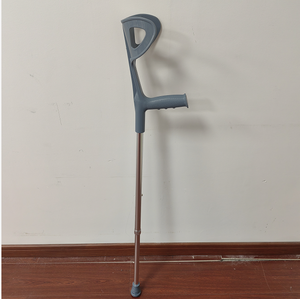
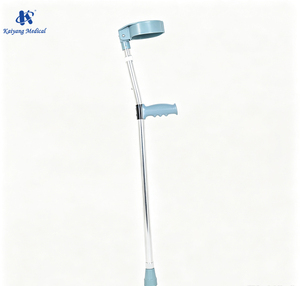
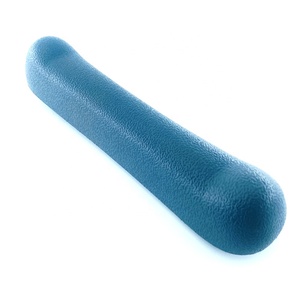
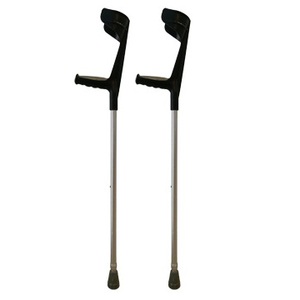
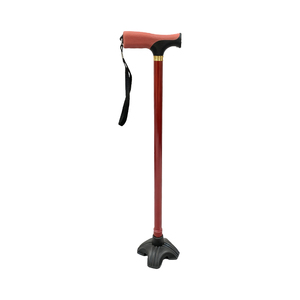
In the contemporary global healthcare supply chain, selecting a top-tier medical crutches supplier from China is no longer merely a transaction based on unit price. It requires a rigorous evaluation of structural engineering standards, regulatory compliance protocols, material purity, and sustainable volume production. As hospitals, emergency medical services, government tenders, and homecare equipment distributors scale their procurement, understanding the technical fundamentals of modern mobility aids is paramount.
China has solidified its position as the premier manufacturing powerhouse for Class I and Class II medical mobility devices. With fully integrated aluminum extrusion lines, automated robotic welding cells, and localized anodization ecosystems, Chinese manufacturers provide unprecedented scale. However, establishing a resilient B2B procurement framework demands deep expertise in key engineering metrics: structural yield strength (measured in MPa), wall thickness consistency, fatigue testing endurance (per ISO 11199-1 guidelines), and ergonomic biomechanics.
Professional procurement teams must categorize crutches according to patient pathology, recovery timeline, and biomechanical load redistribution requirements. China's top medical crutch suppliers focus heavily on three major architectural categories:
Designed primarily for acute lower-limb trauma, fractures, and immediate post-surgical weight-offloading. Constructed with dual extruded vertical pillars, an integrated axillary pad cushion, and a center-telescoping extension leg. Optimized for short-term rehabilitation (up to 12 weeks).
Engineered for long-term mobility impairment, paraplegia, and neurological rehabilitation. Features a semi-flexible hinged or solid cuff that encases the forearm, transferring weight to the upper arm muscles and wrist, allowing complete hand dexterity without dropping the device.
Targeted at post-stroke, geriatric, and balance-compromised patients. Incorporates a wide four-point (Quad) or three-point (Tripod) base fitted with rubber suction ferrules, maximizing static and dynamic ground adhesion across non-uniform indoor and outdoor terrains.
To assist institutional buyers in draft specification preparation, the following data visualization contrasts the key physical parameters across industrial manufacturing standards in China:
| Engineering Parameter | Hospital-Grade Axillary Crutch | Ergonomic Forearm Crutch | Bariatric Heavy-Duty Crutch | Ultra-Light Carbon Hybrid |
|---|---|---|---|---|
| 6061-T6 Anodized Aluminum | 6063-T5 / Stainless Steel Cuff | Reinforced Steel / Heavy Tube | 3K Carbon Fiber Composite | |
| 1.25 mm – 1.40 mm | 1.35 mm – 1.50 mm | 1.80 mm – 2.20 mm | 1.10 mm (High Modulus) | |
| 136 kg (300 lbs) | 150 kg (330 lbs) | 227 kg (500 lbs) | 120 kg (265 lbs) | |
| 750 grams | 520 grams | 1,150 grams | 340 grams | |
| Dual-Pin Push Button (2.5cm pitch) | Single-Pin + Anti-Rattle Ring | Solid Steel Locking Bolt | Internal Cam-Lock System | |
| 65 Shore A TPR Rubber | 70 Shore A Non-Marking Rubber | 75 Shore A Steel-Reinforced | Flexible Articulating Base | |
| CE, FDA Class I, ISO 11199-1 | CE, ISO 13485, MDR 2017/745 | CE, FDA, ISO 11199-1 | CE, ISO 13485 Compliance |
When evaluating China top medical crutches suppliers, enterprise buyers must scrutinize factory production infrastructure, quality control systems (QMS), and regulatory audits. Premier suppliers distinguish themselves through rigorous process control across four core operational pillars:
Advanced factories utilize high-precision CNC tube-bending and laser-drilling systems. This guarantees hole-alignment tolerance within ±0.05mm across height adjustment slots, eliminating shaft wobble and micro-binding during user adjustments.
Surface treatment involves anodic oxidation producing a protective oxide layer of 12–15 microns. This provides scratch resistance, sweat-corrosion immunity, and withstands harsh hospital-grade chemical disinfectants (isopropyl alcohol, sodium hypochlorite).
Underarm pads and handgrips are molded from non-toxic, latex-free Thermoplastic Rubber (TPR) or high-density EVA foam. Materials pass REACH SVHC and RoHS chemical safety testing, preventing skin irritation during prolonged patient contact.
Furthermore, leading Chinese suppliers maintain complete traceability systems. Every master carton and individual crutch shaft is stamped with a unique batch number, enabling seamless tracking from raw material melt-test certificates to final container shipment.
The global medical mobility device market is experiencing rapid technological evolutionary shifts driven by an aging population, increasing orthopedic surgical procedures, and heightened patient expectations for comfort and safety. Forward-thinking procurement officers must align their sourcing strategies with these five structural trends:
Traditional rigid crutches transfer ground reaction forces (GRF) directly to the user's upper extremities, leading to shoulder tendinitis, carpal tunnel syndrome, and axillary nerve palsy. Next-generation crutches manufactured in China incorporate internal pneumatic or elastomeric spring dampeners within the lower shaft. These shock-absorbing mechanisms compress up to 25mm upon heel strike, reducing peak joint impact forces by up to 32%.
In post-operative orthopedic recovery (such as total hip arthroplasty or complex fracture fixation), surgeons often mandate partial weight-bearing (PWB) protocols. Emerging smart crutches feature built-in strain gauges, accelerometers, and Bluetooth Low Energy (BLE) modules. The crutch provides real-time haptic or auditory alerts when the patient exceeds prescribed weight thresholds, transmitting compliance telemetry directly to physical therapy portals.
Environmental, Social, and Governance (ESG) criteria are increasingly embedded in European and North American healthcare procurement tenders. Chinese suppliers are pioneering the use of recycled green aluminum produced via hydroelectric power, cutting the embodied carbon footprint by over 60%. Simultaneously, non-structural components like handgrips and leg clips are shifting toward bio-based polyamides and recycled ocean plastics.
Standard cylindrical handgrips cause localized pressure spikes on the palmar nerve. Top-tier manufacturers are standardizing anatomically molded palm platforms that distribute weight evenly across the palmar fascia. Palmar pressure distribution mapping reveals a 45% decrease in peak localized tissue pressure when utilizing contoured TPR grips.
Addressing key technical, logistical, and compliance inquiries encountered during bulk procurement from China medical crutches suppliers.
For the European Union, crutches fall under Class I Medical Devices under the Medical Device Regulation (MDR 2017/745), requiring an official CE Declaration of Conformity, Technical File compliance with EN ISO 11199-1:2021, and an authorized European Representative (EC REP). For the United States, manufacturers must be registered with the FDA, and products listed under 21 CFR 890.3150 (Crutch) or 21 CFR 890.3500 (Canes/Crutches), manufactured within an ISO 13485 certified Quality Management System.
Static load testing is conducted using specialized hydraulic press equipment per ISO 11199 specifications. The crutch is adjusted to its maximum height, positioned at a standard operational angle (7 degrees for forearm crutches), and subjected to a continuous downward vertical force equal to 1.5 to 2.5 times the maximum rated load for a minimum of 10 seconds. Permanent structural deformation must not exceed 0.5% of total length.
Standard factory MOQ for stock configurations is generally 500 to 1,000 units. For full OEM customization—including custom anodized tube colors, laser-engraved hospital logos, custom blister card packaging, and specialized instruction manuals—the standard MOQ is 2,000 units per model. Standard mass production lead times range between 25 to 35 calendar days following pre-production sample sign-off.
Slip resistance depends on the bottom ferrule design. Top suppliers engineer rubber tips featuring a deep tread pattern with multi-directional micro-sipes that evacuate water films. Additionally, an internal embedded metal washer prevents the aluminum tubing from cutting through the rubber base over time, maintaining structural integrity and ground contact area.
To eliminate annoying clicking noises and mechanical slop, premium crutches incorporate a threaded anti-rattle silencer nut at the adjustment joint. Tightening this collar compresses a internal plastic sleeve around the inner tube, locking it firmly in place while preserving quick push-button height adjustability.
Yes. Standard production splits models into three distinct anthropometric sizes: Pediatric (user height 115 cm – 140 cm), Adult Standard (140 cm – 185 cm), and Tall Adult (185 cm – 205 cm). Telescoping shafts feature 9 to 13 discrete push-pin indexing increments spaced at 2.5 cm intervals.
To ensure 100% compliance with international medical device standards, top China suppliers execute a multi-tier Quality Assurance (QA) workflow prior to releasing goods for export. Institutional buyers should require an Acceptable Quality Limit (AQL) of AQL 1.0 Critical, AQL 1.5 Major, and AQL 4.0 Minor.
Every batch undergoes automated gauge testing. Push-pin spring tension is measured to ensure engagement force remains between 15 N and 25 N—preventing accidental depression under load while remaining easy for frail elderly users to adjust.
Finished goods in full export packaging undergo ISTA 1A drop testing from a height of 76 cm onto concrete. This verifies that inner polybags, corrugated divider sleeves, and master cartons prevent cosmetic scratching, denting, or component dislocation during sea transit.
Master cartons are constructed using 5-ply double-wall heavy-duty kraft paperboard (ECT-44 or Mullen test 275 lbs/in²). Individual units are nested in anti-humidity polybags with desiccant packets, safeguarding against moisture condensation during equatorial sea transits.
Direct factory pricing, OEM/ODM customization, comprehensive CE/FDA technical dossiers, and guaranteed on-time global fulfillment for institutional buyers.