Engineered for hospital wards, rehabilitation clinics, and home care environments. Fully tested for durability, ergonomic safety, and structural integrity.
An engineering and market evaluation of next-generation mobility transfers, ergonomic safety compliance, and technological shifts shaping institutional care.
The global medical patient transfer market is undergoing a rapid transition from traditional manual hydraulic systems to high-precision electric actuator platforms. Driven by strict occupational health standards (such as OSHA caregiver safety guidelines), medical institutions are prioritizing automated hoists that eliminate physical strain during patient handling.
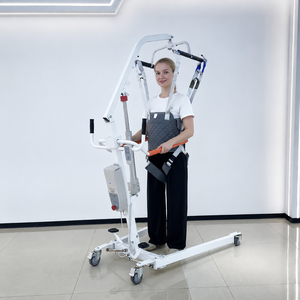
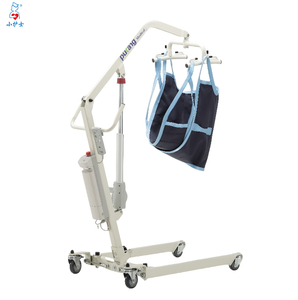
Modern battery-powered lifts feature dual-actuator technology, enabling independent vertical elevation and base-width adjustments. Advanced telemetry controllers integrated into the lifting column collect real-time data regarding motor cycles, battery state-of-health (SoH), and load thresholds, allowing healthcare facilities to implement predictive maintenance protocols and minimize operational downtime.
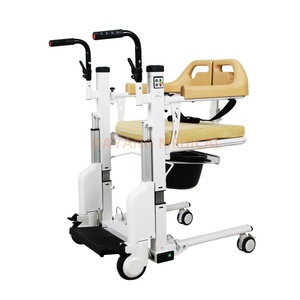
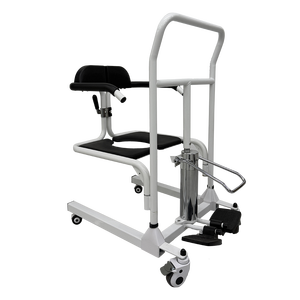
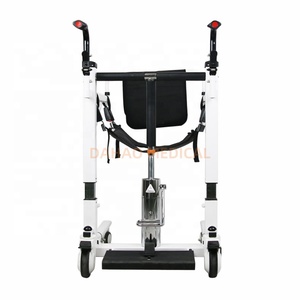
Hospital ward managers and home care providers increasingly demand space-efficient, multi-purpose mobility hardware. Modern transfer chairs seamlessly integrate four core care functionalities into a single unitized chassis: Patient Lift, Commode Chair, Shower Transport, and Standard Wheelchair.
By incorporating 180-degree rear-opening split seats, these hybrid transfer devices enable a single caregiver to execute zero-lifting transfers from beds, sofas, or wheelchairs directly onto a commode or bath setup. Structural frames constructed from high-tensile Q235 carbon steel or aircraft-grade 6061-T6 aluminum alloy undergo electrostatic powder coating to ensure total resistance to aggressive clinical disinfectants and moisture exposure.
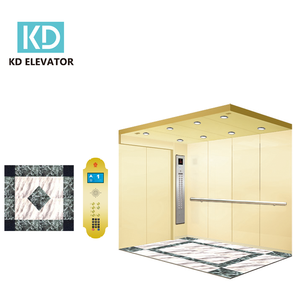
In acute care facilities and multi-story rehabilitation hospitals, vertical transport systems are directly tied to patient safety during critical transfers. Variable Voltage Variable Frequency (VVVF) drive systems combined with permanent magnet synchronous gearless traction machines have set a new baseline for hospital bed lifts.
These systems emphasize micro-level floor leveling accuracy (< ±2mm), sub-perceptual vibration indexes during acceleration/deceleration, and expanded cabin dimensions engineered to accommodate emergency stretchers, life-support equipment, and accompanying medical staff simultaneously.
Evaluating operational parameters across primary patient lift categories to guide B2B procurement decisions.
| Lift Category | Actuation Mechanism | Safe Working Load (SWL) | Primary Application | Safety & Compliance Standards |
|---|---|---|---|---|
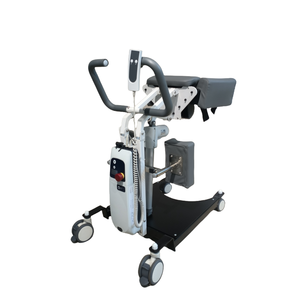
| Electric Sit-to-Stand Hoist | 24V DC Linak Motor System | 180 kg – 250 kg | Weight-bearing rehabilitation, transfer assistance | ISO 10535, IEC 60601-1, CE MDR Class I |
| Electric Transfer Commode Chair | Waterproof Electric Screw Actuator | 120 kg – 150 kg | Bathroom transport, commode use, indoor mobility | IPX4 Waterproof, CE Marking, FDA 510(k) |
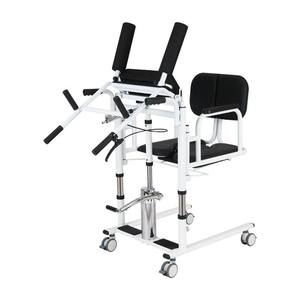
| Manual Hydraulic Transfer Aid | Dual-Pedal Hydraulic Pump | 130 kg – 160 kg | Care homes, budget-constrained clinical wards | ISO 9001, CE Safety Directives |
| VVVF Medical Elevator | Gearless Synchronous Traction Drive | 1600 kg – 2500 kg | Vertical building transport for beds/stretchers | EN81-20/50, GB7588, Elevator Safety Code |
Key strategic considerations for global medical equipment distributors, hospital procurement groups, and government tenders when importing from China.
Global procurement teams must verify that patient hoists meet ISO 10535 standards, which mandate static load testing at 1.5 times the rated Safe Working Load (SWL), fatigue endurance testing across 10,000 continuous lifting cycles, and strict anti-entrapment structural clearances.
Furthermore, entry into European and North American markets requires full compliance with EU Medical Device Regulation (MDR 2017/745) Class I technical documentation and FDA 510(k) clearances for motorized patient lifts.
Distributors are moving away from single-purpose SKUs to modular equipment platforms that utilize standardized replacement parts (such as universal control boxes, standardized motor mounting brackets, and interchangeable slings).
This structural modularity reduces spare part inventory costs by up to 35% and simplifies field service maintenance for overseas importers maintaining local service networks.
Strategic B2B buyers evaluate suppliers based on TCO rather than initial FOB unit cost. Premium China suppliers differentiate themselves by utilizing high-grade electronics (such as Linak or TiMOTION actuators), corrosion-resistant frame treatments, and long-lasting polyurethane casters.
Investing in higher-tier components substantially reduces warranty claims, shipping costs for replacement parts, and end-user dissatisfaction.
As a premier patient lift manufacturer and global exporter, our production facilities combine advanced robotic welding, computerized load-testing benches, and rigorous quality control protocols to deliver medical-grade mobility hardware.
Every single lift unit undergoes dynamic 1.5x SWL overload testing prior to export packaging.
Tailored frame dimensions, custom branding, voltage configurations, and bespoke sling engineering.
Complete documentation support including CE, ISO 13485, MSDS for batteries, and UN38.3 sea/air transport certification.
Addressing key technical, compliance, and ordering queries for commercial importers and healthcare buyers.
B2B importers should ensure the supplier holds ISO 13485 (Medical Devices Quality Management) and that the specific lift model complies with ISO 10535. For the European market, CE marking under the Medical Device Regulation (MDR 2017/745) Class I is mandatory. For North America, FDA registration and 510(k) clearance (for motorized lifts) are required.
Standard medical patient lifts typically feature an SWL ranging from 150 kg (330 lbs) to 180 kg (400 lbs). Heavy-duty or bariatric patient hoists offer SWL capacities between 220 kg (485 lbs) and 300 kg (660 lbs). Always ensure your selected model matches the specific patient demographic of your facility.
Electric lifts utilize motor-driven linear actuators controlled by hand pendants or column switches, providing smooth, effort-free elevation that reduces caregiver physical strain to zero. Manual hydraulic lifts rely on foot pumps or hand levers, offering a cost-effective solution for facilities with limited power infrastructure, though requiring slightly more manual labor.
High-quality electric patient lifts include an emergency red stop button (which cuts main power instantly), a mechanical manual emergency lowering screw or pull-latch on the actuator cylinder, an audible low-battery indicator, and electronic overload protection to prevent operation beyond rated SWL capacities.
Yes. We supply a full spectrum of OEM/ODM slings, including general transfer slings, commode-opening slings, padded stand-assist harnesses, and mesh waterproof bathing slings. Slings can be customized in terms of fabric weight, strap attachment loops, color-coded sizing, and private logo labeling.
Electric patient lifts equipped with rechargeable lithium batteries are shipped in full compliance with international dangerous goods regulations (DG). We provide UN38.3 test reports, MSDS documentation, and proper Air/Sea transport packaging certification to guarantee smooth customs clearance at destination ports.
