China Best Motorized Wheelchair Factories & Exporter

2026 Global Procurement Whitepaper: Advanced Electric Mobility Engineering, OEM/ODM Supply Chains, and Technical Compliance Standards for International Buyers

Featured Industrial Motorized Wheelchairs & Rehabilitation Aids

Explore China's top-tier motorized mobility solutions engineered for high durability, lightweight portability, smart gait rehabilitation, and all-terrain performance.
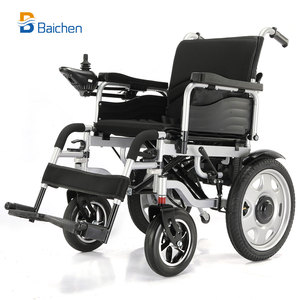
High-Performance Sports Wheelchair With Quick Release Wheels

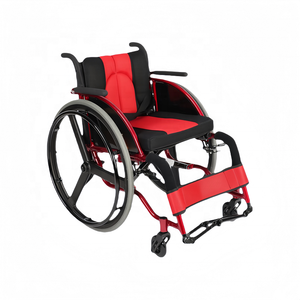
High-Performance Sports Wheelchair With Quick Release Wheels

  • Ultra-Light Aircraft Aluminum Chassis
  • Quick-Release Precision Axle Mechanism
  • Enhanced Mobility & Ergonomic Comfort
Contact Us
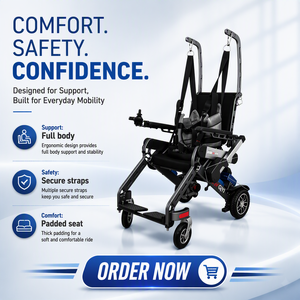
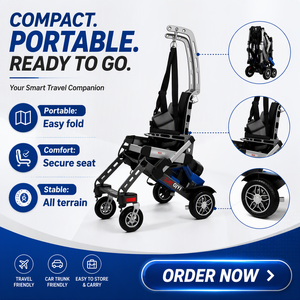
Leyidi Intelligent Electric Rollator Wheelchair CE Certified Smart Robot

Leyidi Intelligent Electric Rollator Smart Automatic Robot

  • CE Certified Gait Training Robot
  • Active & Passive Rehabilitation Modes
  • Smart Sensor Anti-Fall Architecture
Contact Us
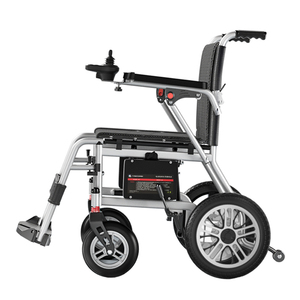
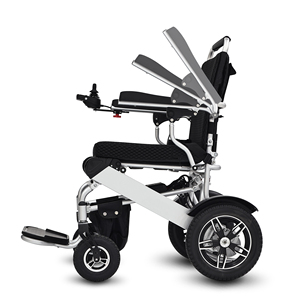
2026 Outdoor Travel Portable All Terrain Foldable Electric Wheelchairs

2026 Outdoor Travel Portable All Terrain Foldable Electric Wheelchair

  • Dual High-Torque Motors
  • Instant 3-Second Quick Folding
  • Rugged Pneumatic All-Terrain Tires
Contact Us
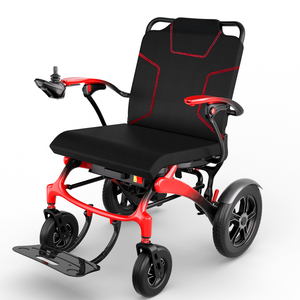
4x4 Lightweight Aluminum Alloy Electric Wheelchair for Adults

2026 Foldable Brushless Motorized Detachable Battery 4x4 Power Wheelchair

  • Brushless Energy-Efficient Hub Motors
  • Detachable UN38.3 Lithium Battery
  • 6061 Lightweight Aluminum Framework
Contact Us
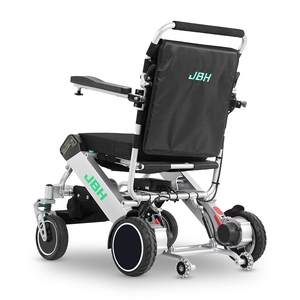
500W Dual Motor Carbon Fiber Power Wheelchair

500W Dual Motor Big Wheel Carbon Fiber Power Wheelchair

  • Aerospace-Grade Carbon Fiber Structure
  • 500W Peak High-Efficiency Output
  • Large Rear Drive Wheels for Stability
Contact Us
Airline Approved Portable Electric Wheelchair 500W Powerful Motor

Airline Approved Portable Electric Wheelchair (20km Cruising Range)

  • IATA & FAA Flight Compliance Approved
  • 20km Extended Cruising Range
  • Ultra-Compact Trunk-Fit Geometry
Contact Us
Intelligent Gait Rehabilitation Trainer Leyidi Smart Electric Rollator

Intelligent Gait Rehabilitation Trainer Leyidi Smart Electric Rollator

  • Real-time Biometric Feedback System
  • Adaptive Speed Control Algorithms
  • Medical CE Approved Clinical Aid
Contact Us
High Quality Portable Aluminum Alloy Electric Wheelchair

Portable Aluminum Alloy Electric Wheelchair & Rehabilitation Walker

  • Multi-Functional Therapy Support
  • Corrosion-Resistant Anodized Alloy
  • Smooth Electromagnetic Braking
Contact Us
150,000+
Annual Unit Export Capacity
ISO 13485
Medical Device System Certified
85+
Countries & Regions Served
100%
Full QC Batch Testing

Executive Summary: China’s Dominance in Motorized Wheelchair Manufacturing

The global personal mobility device market is experiencing an unprecedented structural shift driven by an aging global demographic, increasing healthcare expenditures, and rapid advancements in electromechanical engineering. As international procurement directors, medical equipment distributors, and B2B buyers navigate this evolving landscape, China remains the undisputed global hub for motorized wheelchair manufacturing and export.

China’s motorized wheelchair manufacturing ecosystem offers unparalleled comparative advantages, combining robust supply chain integration, advanced robotic automation, rigorous compliance frameworks (including CE, FDA, ISO13485, and EN12184), and continuous R&D innovation. Today’s premier Chinese factories have transitioned from basic contract assembly to high-value OEM/ODM engineering powerhouses capable of producing smart robotic gait trainers, carbon-fiber ultra-lightweight power chairs, and heavy-duty 4x4 all-terrain mobility devices.

Key Procurement Takeaway for B2B Buyers

Sourcing motorized wheelchairs directly from top-tier Chinese manufacturers yields a 30% to 45% cost efficiency compared to Western assembly lines, while offering superior customizability, shorter lead times, and certified quality compliance matching global regulatory expectations.

Industrial Material & Engineering Specifications Matrix

To optimize procurement decisions, purchasing managers must evaluate key structural materials, motor architectures, and energy storage options. The comparative data matrix below highlights the core technical trade-offs across current manufacturing benchmarks in leading Chinese facilities:

Evaluation Parameter Carbon Fiber Power Wheelchairs 6061-T6 Aluminum Alloy Models Smart Robotic Rollators / Gait Trainers
Structural Density / Weight Ultra-light (14 kg - 18 kg) Lightweight (21 kg - 28 kg) Medium-Heavy (25 kg - 35 kg)
Tensile Strength Extreme (> 3500 MPa) High (approx. 310 MPa) High Structural Integrity Chassis
Motor Technology 500W High-Torque Brushless Hub 250W - 400W Brushless / Brushed Servo Motor Actuation & Dynamic Assist
Primary Target Application Premium Airline Travel & Active Use Standard Mass-Market & Rental Fleet Clinical Rehabilitation & Gait Training
Braking & Safety Electromagnetic Intelligent Auto-Brake Electromagnetic + Manual Park Brake Anti-Fall Sensor & Active Assist Brake
Battery Systems Removable LiFePO4 / Lithium-ion Standard Lithium / Optional Sealed Lead-Acid High-Density Modular Smart Lithium Pack

Future Procurement Trends: What B2B Importers Must Know (2026–2030)

The motorized wheelchair export industry is transitioning rapidly toward smart, lightweight, and user-centric designs. Understanding these macro trends allows wholesale buyers and healthcare institutions to stock products with higher commercial longevity and superior market demand.

1. Brushless Motors & Lithium Energy

Legacy brushed motors and heavy lead-acid batteries are being phased out in favor of maintenance-free brushless DC motors paired with high-density lithium-ion or LiFePO4 battery packs. Brushless systems deliver 85%+ energy efficiency, reduced thermal dissipation, and double the operational lifespan of traditional drive motors.

2. Carbon Fiber Composite Structures

Weight optimization is the single biggest consumer driver in personal power mobility. Modern Chinese factories are leveraging advanced carbon-fiber weaving techniques to build complete power chair frames weighing under 15 kg without battery. This material shift allows end users to lift chairs effortlessly into vehicle trunks.

3. AI Rehabilitation & Smart Gait Assistance

The integration of robotics into rehabilitation equipment has created a dynamic new category: Smart Electric Rollators. Utilizing multi-axis gyroscopes, force-sensing resistors, and AI gait prediction algorithms, these intelligent aids automatically adjust speed during inclines and apply proactive braking during descent.

Why Sourcing from OEM/ODM Chinese Factories Delivers Sustainable Competitive Advantage

In the highly competitive medical device and personal mobility marketplace, long-term success depends on partnering with verified, high-precision manufacturers. Modern Chinese factories offer significant technical advantages that empower brand owners and healthcare distributors to scale profitably.

Robotic Precision Welding

Utilizing multi-axis automated robotic arm welding ensures structural seam integrity, eliminates human welding fatigue errors, and provides continuous, uniform load-bearing performance across aluminum and carbon-steel frames.

End-to-End OEM/ODM Customization

From custom joystick controller tuning (PG Drives / dynamic control systems) to custom frame geometry, color powder coating, brand logo silk-screening, and bespoke packaging configurations, Chinese exporters support tailored production lines.

Strict QC & Environmental Stress Testing

Top manufacturing hubs conduct rigorous multi-stage quality assurance tests including double-drum fatigue testing (over 200,000 cycles), drop tests, salt spray corrosion testing, incline stability verification, and electromagnetic compatibility (EMC) testing.

Frequently Asked Questions (FAQ) for B2B Buyers & Importers

Below are authoritative answers to common inquiries raised by international medical equipment buyers, distributors, and procurement teams sourcing motorized wheelchairs from China.

What international certifications are required for importing motorized wheelchairs from China?
To legally import and commercialize motorized wheelchairs, buyers generally require CE certification (under Medical Device Regulation MDR 2017/745 for Europe), FDA 510(k) clearance or registration (for the United States), ISO 13485 Quality Management System accreditation, and EN12184 performance compliance testing. For air transport of lithium batteries, UN38.3 and MSDS test reports are mandatory.
Are the lithium batteries used in motorized wheelchairs airline-approved?
Yes. Under International Air Transport Association (IATA) and FAA guidelines, power wheelchairs with removable lithium-ion batteries under 300Wh capacity (or dual batteries under 160Wh each) are approved for carry-on flight transport. Leading Chinese exporters provide standardized flight-safe battery configurations with UN38.3 verification certificates.
What is the typical Minimum Order Quantity (MOQ) and production lead time for OEM orders?
Standard stock catalog models typically require an MOQ of 5 to 10 units for sample testing. Custom OEM orders featuring branded colorways, specialized logo branding, and modified dimensions usually carry an MOQ of 50 to 100 units. Standard mass production lead times range between 20 to 35 business days upon sample approval.
What is the difference between Brushless and Brushed motors in electric wheelchairs?
Brushless DC (BLDC) motors offer higher efficiency (longer battery life per charge), operate almost silently, generate lower friction heat, and require zero carbon brush replacement. Brushed motors are lower initial cost but are heavier, less energy-efficient, and require periodic maintenance over long-term usage.
How do Chinese exporters ensure quality control before shipment?
Reputable factories enforce a 4-tier Quality Assurance protocol: Incoming Quality Control (IQC) on raw materials/cells/joysticks, In-Process Quality Control (IPQC) on frame welding and assembly, Final Quality Control (FQC) involving 100% drive-testing on dynamic inclines, and Outgoing Quality Control (OQC) verifying export packaging integrity.
Can Chinese factories supply spare parts and technical after-sales support?
Yes. Leading export manufacturers offer 1% to 2% complimentary wearing spare parts (such as tires, armrest pads, wire harnesses) with container orders and provide long-term access to replacement joysticks, controllers, hub motors, and lithium packs, backed by digital technical manuals and engineering support.

Ready to Scale Your Mobility Product Line?

Connect directly with our senior engineering and export procurement specialists for factory direct pricing, customized OEM quotations, and technical compliance datasheets.

Contact Us