0%

A Motorized Power Wheelchair is more than a powered seat with four wheels. It is a mobility system designed to help people travel, turn, stop, and position their bodies with less physical effort. Unlike a manual wheelchair, it uses rechargeable batteries, electric motors, and an electronic controller. The user commonly operates these functions through a joystick, head array, sip-and-puff device, or other adaptive control.

Rory Cooper, a wheelchair researcher, rehabilitation engineer, and disability-rights advocate, has said, “A wheelchair is not a symbol of disability; it is a symbol of independence.” That idea helps explain the technology’s purpose. A well-fitted Motorized Power Wheelchair can move across a hallway, climb suitable ramps, and support daily activities at home, work, or outdoors. Its performance depends on the motor, battery capacity, terrain, user weight, seating system, and maintenance.

The details matter. A joystick signal travels to the controller, which regulates power to each motor. Small changes in direction can create precise turns. However, real-world performance is less tidy. Cold weather may reduce battery range. Uneven ground can affect stability. Poor seating support can cause discomfort, even when the chair moves correctly.

This article explains how these systems work, what their main components do, and why professional assessment matters. It also questions a common assumption: more power does not always mean better mobility. The right chair must fit the person, environment, body, and routine. That fit takes careful observation.
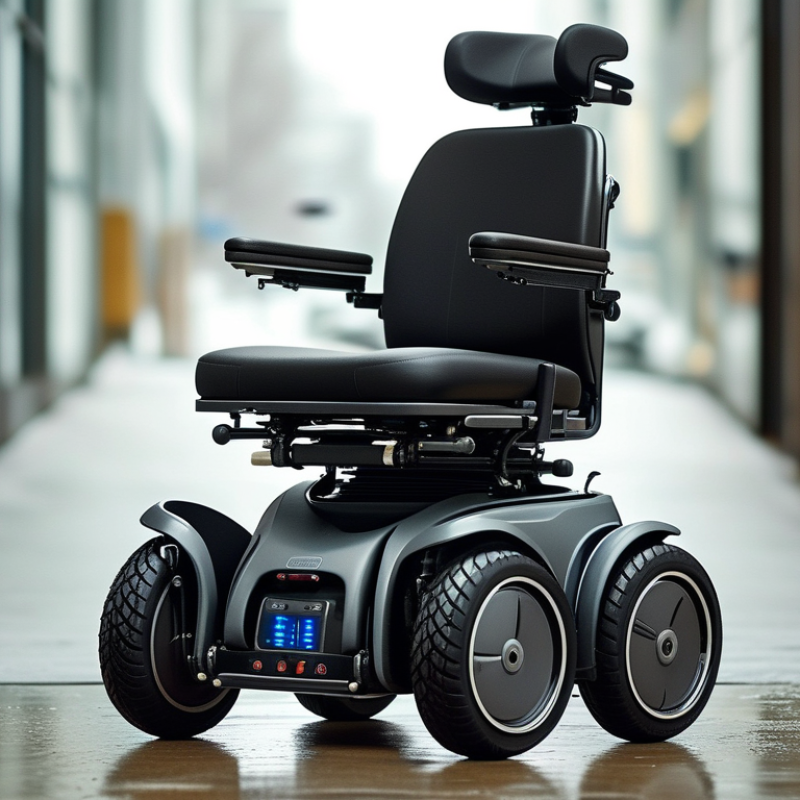
What Is a Motorized Power Wheelchair and How Does It Work?

Definition and Purpose: FDA Class II Powered Wheelchairs for Mobility

A motorized power wheelchair is a medical mobility device driven by electric motors rather than manual pushing. In the United States, the FDA classifies powered wheelchairs as Class II medical devices under 21 CFR 890.3860. This classification requires general and special controls because the device affects movement, posture, and user safety. Its purpose is practical: helping people with limited walking ability move through homes, clinics, workplaces, and outdoor paths.

A rechargeable battery supplies electrical power. A controller converts joystick commands into motor movement. Push the joystick forward, and the drive wheels turn. Move it sideways, and the chair changes direction. Releasing the joystick usually activates braking. Speed limits, anti-tip wheels, adjustable seating, and belts can reduce risk, although no feature removes every hazard. A small curb can still create a serious problem.

The World Health Organization reported that more than 2.5 billion people need at least one assistive product, with this number expected to exceed 3.5 billion by 2050. That figure shows why powered wheelchairs matter beyond personal convenience. Fit remains critical. Seat width, foot support, battery range, and joystick position should match the user’s body and routine. In real use, uneven flooring, cold weather, and poor posture can reduce control. I would not treat the FDA classification as a guarantee of perfect performance. It describes regulatory risk controls, not effortless mobility. Users should receive professional assessment, fitting, and practical training before regular operation.

Sources: U.S. FDA, 21 CFR 890.3860; World Health Organization, Global Report on Assistive Technology, 2022.

Main Systems: 24-V Batteries, Motors, Controllers, and Seating

What Is a Motorized Power Wheelchair and How Does It Work?

Main Systems: 24-V Batteries, Motors, Controllers, and Seating

A motorized power wheelchair uses stored electrical energy to move with controlled, low-speed power. Most systems use two 12-volt batteries connected in series, creating a 24-volt supply. This voltage feeds the motors through a controller, which acts like the chair’s traffic manager. When the user moves the joystick, the controller interprets direction and speed commands. It then adjusts power sent to each motor, allowing forward movement, turning, or stopping.

The motors usually drive the wheels through gearboxes. This design trades speed for torque, helping the chair cross thresholds, ramps, and firm outdoor surfaces. Battery performance depends on charging habits, temperature, load, and battery age. A chair may feel slower near the end of a long day. That detail is easy to miss. Regular inspection by a qualified technician can identify loose connections, worn tires, or unusual motor noise before they affect safety.

Seating is part of the operating system, not decoration. Proper seat width, cushion support, back angle, and foot positioning influence comfort and control. Some users need power tilt or recline, but these features add weight and consume energy. Testing the chair on the user’s usual floors and slopes gives better information than relying on specifications alone. No setup is perfect. Small adjustments may still be needed after real daily use.

From Joystick Input to Wheel Torque: ISO 7176-14 Control Principles

A motorized power wheelchair turns a small hand movement into controlled wheel torque. The joystick does not directly drive the motors. It sends direction and speed signals to a controller. The controller interprets them, checks programmed limits, and commands two electric motors. Different wheel speeds create turning. Equal speeds create forward travel. Reverse movement is usually limited for safer maneuvering. This sounds simple. It is not.

ISO 7176-14 addresses electrically powered wheelchair power and control systems. Its principles support repeatable testing of performance, control behavior, and safety-related responses. In practical use, the controller manages acceleration, stopping, motor current, battery voltage, and fault conditions. When the joystick returns to center, torque should decrease predictably. On a ramp, the chair should not lose control abruptly. If a fault appears, the system may restrict or interrupt power. Testing can include repeatable inputs, load conditions, and measured stopping behavior. The standard guides evaluation. It does not replace clinical fitting or user training.

From practical observation, effective control feels almost boring. The chair moves when intended and stops without a jolt. Small joystick movements should provide precise control near furniture. Larger movements may request faster travel, but acceleration still needs restraint. Real surfaces complicate the model. Loose gravel, tire wear, and low battery voltage can change response. Engineers allow for these variables, yet no setting suits everyone. I would recheck seating position, hand control, and stopping distance instead of trusting default values. That check is easy to skip. It matters.

What Is a Motorized Power Wheelchair and How Does It Work? — From Joystick Input to Wheel Torque: ISO 7176-14 Control Principles

Typical engineering values are representative ranges for adult powered wheelchairs; actual specifications vary by configuration, user mass, terrain, battery condition, and controller settings.
Control Stage Primary Component Input or Output Typical Technical Data Control Principle and Function Relevant Safety Consideration
1. User Command Joystick module Forward, reverse, left, right, and stop commands Two-axis proportional input; neutral position normally represents zero requested speed The joystick position is converted into a requested direction and speed. Greater displacement generally produces a greater command, subject to programmed limits. The system should detect implausible signals, joystick displacement during power-up, and loss of communication before enabling drive.
2. Signal Processing Joystick electronics and control interface Low-voltage analog or digital command signal Common control supply levels include approximately 5 V DC; actual signal architecture depends on the system design Input signals are filtered, calibrated around the neutral position, and checked for range, plausibility, and communication integrity. Open-circuit, short-circuit, out-of-range, or contradictory signals should result in a controlled inhibit or reduced-power response.
3. Requested Motion Main wheelchair controller Requested linear speed and turning rate Typical maximum travel speed: about 6–12 km/h, depending on the wheelchair category and configuration The controller combines joystick commands with speed limits, acceleration limits, deceleration limits, and operating-mode settings. Acceleration and braking should remain predictable on slopes, during turns, and when the battery voltage changes.
4. Differential Steering Left and right motor command channels Individual speed and direction commands for each drive wheel Straight travel uses similar wheel speeds; turning requires a speed difference between the left and right sides A simplified differential-drive relationship is: left-wheel speed = forward speed − turning component; right-wheel speed = forward speed + turning component. The controller should limit inside-wheel speed, prevent excessive turning acceleration, and reduce speed when stability or traction may be compromised.
5. Power Conversion Motor power stage Battery DC converted into controlled motor current Many systems use a nominal 24 V battery system; current demand can rise substantially during acceleration or hill climbing Electronic switching devices regulate motor voltage and current. Motor current is the main controllable quantity related to traction torque. Overcurrent, overheating, low battery voltage, and power-stage faults should trigger current limiting or a safe shutdown strategy.
6. Motor Torque Electric drive motors Electrical current converted into rotational torque For a DC motor, torque is approximately proportional to armature current: T ≈ ktI Higher commanded current produces higher motor torque until controller, motor, thermal, traction, or battery limits are reached. Torque must be limited to avoid wheel slip, excessive mechanical stress, overheating, or unexpected movement.
7. Gear Reduction Drive gearbox or transaxle Motor speed reduced and wheel torque increased Output torque is approximately motor torque × gear ratio × efficiency; practical efficiency is below 100% Gear reduction allows a relatively high-speed motor to provide the lower speed and higher torque required at the drive wheel. Backlash, gear wear, lubrication condition, and mechanical damage can affect control accuracy and braking performance.
8. Wheel Force Drive wheel and tire contact patch Rotational torque converted into forward or reverse force Approximate tractive force: F = Twheel ÷ r, where r is the effective wheel radius Wheel torque produces ground force. Available force is limited by tire-ground friction, load distribution, surface condition, and slope. Wet, loose, uneven, or low-friction surfaces can reduce traction and increase stopping distance.
9. Speed Feedback Motor encoder, Hall sensor, or speed sensor Measured motor or wheel speed Feedback resolution depends on sensor pulses, gear ratio, sampling rate, and controller design Feedback enables closed-loop speed regulation, helping the wheelchair maintain a commanded speed as load and terrain change. Sensor disagreement, missing pulses, or implausible speed readings should be detected and handled without causing unintended acceleration.
10. Braking Electromagnetic parking brake and motor control Controlled deceleration and stationary holding The parking brake is commonly spring-applied and electrically released, so loss of release power can engage the brake Dynamic motor control provides smooth deceleration; the parking brake holds the wheelchair when drive is disabled or the chair is stationary. Brake engagement should be coordinated with motor torque to reduce shock loading, rollback, or unintended free movement.
11. Battery and Energy Supply Rechargeable battery system and charger Stored electrical energy supplied to controller and motors Common battery technologies include sealed lead-acid and lithium-ion; usable range depends on capacity, load, temperature, and terrain The battery supplies current for propulsion, control electronics, braking systems, and auxiliary functions. Voltage changes affect available performance. Battery protection should address overcurrent, deep discharge, overheating, incorrect charging, and damaged wiring or connectors.
12. System-Level Verification Complete powered wheelchair control system Commanded motion compared with actual response ISO 7176-14 addresses power and control-system performance, including aspects of speed control, braking, and control behavior Verification considers predictable operation, controllability, stopping behavior, fault responses, and performance under representative operating conditions. Testing should be performed with appropriate occupant mass, battery condition, slopes, surfaces, loading, and configuration limits.

Key relationship: joystick displacement creates a motion request; the controller converts that request into left and right motor-current commands; motor current creates torque; gearing transfers torque to the drive wheels; and wheel-ground contact produces the force that moves the wheelchair.

Speed and Range: ISO 7176-4 Testing and Typical 15–30 km Travel

A motorized power wheelchair uses rechargeable batteries, electric motors, a controller, and a joystick. The controller converts joystick movement into motor speed and direction. Small inputs create gentle movement. Larger inputs increase speed, within programmed limits. This design supports indoor maneuvering and outdoor travel, but performance depends on the chair’s setup and the user’s weight.

Range needs careful interpretation. ISO 7176-4:2008 measures energy consumption and calculates theoretical distance under controlled test conditions. Testing uses defined battery conditions, load, surfaces, and driving procedures. It does not fully represent hills, cold weather, stop-start traffic, or uneven pavements. ISO 7176-6 addresses maximum speed testing, which is a separate measurement. Typical powered wheelchair travel is often about 15–30 km per charge, based on industry specifications and technical testing data. Real-world distance may be shorter.

A neat number can mislead. Battery age matters. So does tire pressure. A heavier user climbing repeated ramps may consume much more energy than the test profile. The U.S. National Institute on Aging recommends checking mobility equipment suitability with qualified healthcare professionals, especially when terrain and daily distances vary. I would treat the published range as a planning reference, not a promise. Checking battery capacity, charging access, route gradients, and temperature gives a more honest estimate. Some users discover this too late.

Safety and Standards: ISO 7176 Tests and WHO’s 80 Million-User Estimate

A motorized power wheelchair uses rechargeable batteries to drive electric motors connected to its wheels. A joystick sends signals to a controller, which adjusts speed, direction, and braking. Some systems also manage seating functions, such as tilt or elevation. The result is controlled movement without pushing the wheels by hand.

Safety depends on more than smooth operation. The ISO 7176 series examines important factors, including static and dynamic stability, braking effectiveness, battery performance, and powered wheelchair control systems. These tests may place the chair on slopes, uneven surfaces, or controlled obstacles. They create measurable evidence. However, an ISO test cannot reproduce every doorway, wet pavement, loose rug, or crowded sidewalk. Real-world assessment still matters.

The World Health Organization estimates that more than 80 million people need wheelchairs worldwide. This figure shows the scale of mobility needs, but it is not a perfect count. Data quality differs between regions, and some users remain unrecorded. A suitable chair should match the user’s posture, strength, home layout, and daily travel. Professional assessment can reduce pressure injuries and control errors. Small details matter. A poorly positioned joystick, weak battery planning, or an unsuitable cushion can undermine safety, even when the chair meets recognized standards.

FAQS

How far can a motorized power wheelchair travel on one charge?

Typical travel is about 15–30 km per charge. Real-world distance may be shorter. Battery age, user weight, tire pressure, hills, and frequent stops affect range. Treat the figure as a planning estimate.

What does a standardized range test measure?

It measures energy use under controlled battery, load, surface, and driving conditions. It does not fully represent cold weather, steep ramps, wet pavement, or crowded sidewalks.

Why might my wheelchair travel less than the published distance?

Repeated hills and heavy loads consume more energy. Low tire pressure can also reduce efficiency. Cold temperatures may weaken battery performance. A neat number can mislead.

How does the joystick control movement?

The joystick sends movement signals to a controller. The controller adjusts motor speed and direction. Small movements create gentle travel. Larger movements increase speed within programmed limits.

Are maximum speed and travel range the same measurement?

No. Maximum speed and energy consumption are separate performance measurements. A wheelchair may move quickly but travel fewer kilometres between charges.

What safety factors should users consider?

Safety includes stability, braking, battery performance, and control response. Testing may include slopes and controlled obstacles. Real environments are messier. Loose rugs and narrow doorways still require personal caution.

How can I estimate my daily travel more honestly?

Check battery capacity, charging access, route gradients, temperature, and expected stops. Measure the actual route when possible. I might underestimate difficult terrain.

How should a wheelchair fit the user and home?

It should match posture, strength, body size, joystick control, cushion needs, and doorway width. A poorly positioned joystick can cause control errors. Professional assessment may reduce discomfort and pressure injuries.

Conclusion

A Motorized Power Wheelchair is a powered mobility device designed to help people with limited walking ability move independently and safely. Commonly classified as a Class II powered wheelchair by the FDA, it uses a 24-volt battery system, electric motors, a controller, and supportive seating. The user typically operates the chair with a joystick, which sends electronic signals to the controller. The controller then adjusts motor speed and direction, converting the input into controlled wheel torque according to established principles such as ISO 7176-14.

Performance depends on battery capacity, user weight, terrain, and driving conditions. Standardized testing under ISO 7176-4 evaluates travel range, while many chairs can typically travel about 15–30 kilometers on a full charge. Safety testing also examines stability, braking, electromagnetic compatibility, and other operating requirements under the ISO 7176 series. With mobility needs affecting an estimated 80 million people worldwide, powered wheelchairs provide an important solution for personal transportation, daily participation, and greater independence.

Amelia

Amelia

Amelia is a dedicated marketing professional with a strong understanding of the company’s products, customers, and industry landscape. Through her work, she combines strategic insight with clear, practical communication to help readers make informed decisions and discover solutions that support......