0%

Choosing the best Stainless Steel Folding Wheelchair in 2026 depends on more than its frame material. A wheelchair must fit the user, the routes they travel, and the way it will be stored or transported. Stainless steel can offer strength and durability, but it may weigh more than some alternative materials. That difference matters when lifting a chair into a car or carrying it up a step. Small details matter, too. Check the folded width, seat dimensions, footrest design, brake access, and how securely the chair locks open. Test it on the surfaces it will actually encounter.

There is no universal winner. Not quite. Product claims are useful, but they do not replace checking specifications, warranty terms, and independent safety information. A low price may conceal compromises in comfort or service support, while a premium finish does not guarantee a better fit. If possible, have the user sit in the chair and try its folding mechanism before buying. Pay attention to pressure points, stability during transfers, and whether a caregiver can maneuver it comfortably. For individual seating or mobility needs, consult a qualified healthcare or rehabilitation professional. This guide compares practical features and trade-offs, helping readers narrow their options without treating one model as right for everyone.
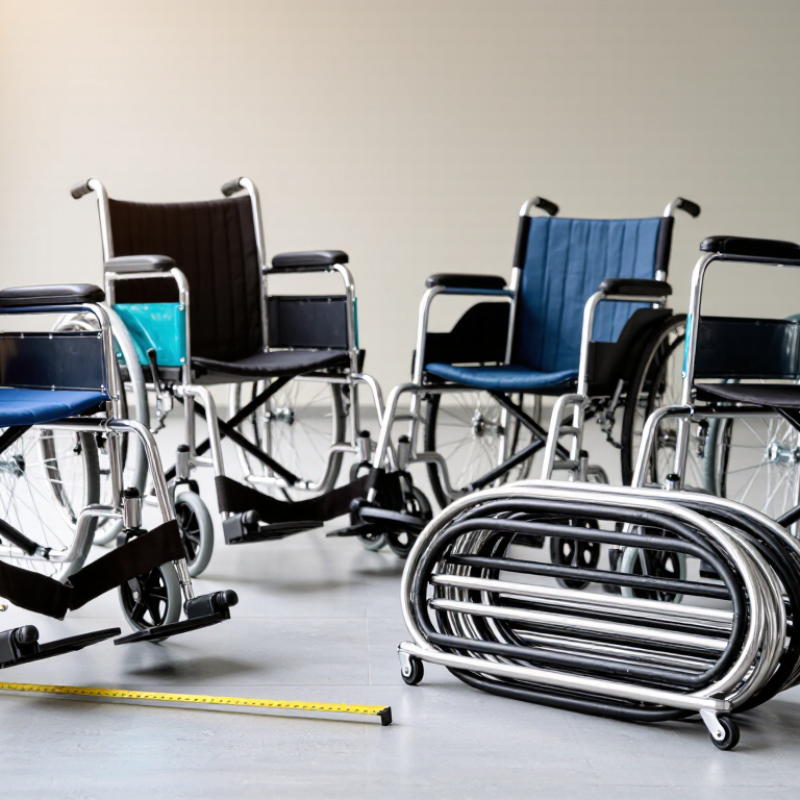
What Is the Best Stainless Steel Folding Wheelchair in 2026?

What Defines a Stainless Steel Folding Wheelchair?

A stainless steel folding wheelchair is defined by more than its frame material. Its tubing, joints, cross-braces, and folding locks must work together to support the user and allow practical storage. Look closely at the hinges: they should open smoothly, lock securely, and show no sharp edges or loose play. The seat and footrests matter, too. A strong frame cannot make an unsuitable fit comfortable.

Stainless steel resists corrosion, but it is not rust-proof. Moisture trapped near welds or fasteners still deserves attention. It may also weigh more than some alternative frame materials, so lifting the folded chair into a car can be harder. There is a trade-off. The ISO 7176 series sets methods for evaluating wheelchair strength, stability, and braking; buyers can ask whether a model has relevant test documentation. WHO and UNICEF’s 2022 Global Report on Assistive Technology estimates that 2.5 billion people need one or more assistive products, a figure projected to reach 3.5 billion by 2050. That broad need does not prove stainless steel is best. Fit, safe transfers, reliable brakes, and manageable weight should guide the choice. I would not judge by shine alone.

Key Criteria for Evaluating Wheelchairs in 2026

What Is the Best Stainless Steel Folding Wheelchair in 2026?

Key Criteria for Evaluating Wheelchairs in 2026

Choosing a stainless steel folding wheelchair means balancing durability, fit, safety, and everyday handling. Stainless steel can resist corrosion, but frame material alone does not prove a chair is sturdy or easy to maneuver. Check the stated user weight limit, folded dimensions, brake design, and the chair’s total weight. Seat width and depth matter, too: a poor fit can make even a well-built chair uncomfortable. The WHO and UNICEF Global Report on Assistive Technology (2022) estimates that 2.5 billion people need assistive products, while nearly one billion lack access. This broad figure is not wheelchair-specific, but it underscores why practical fit and reliable access matter.

Look for test documentation, not vague claims. Relevant ISO 7176 standards cover wheelchair testing, including stability and performance; ask which tests apply to the model. If possible, test folding and unfolding it yourself. Feel for sharp edges, loose joints, and brakes that hold on a slight incline. A sturdy frame may still feel heavy when lifted into a car. That trade-off deserves attention.

Tip: Measure doorways, car storage space, and the user’s seated dimensions before comparing models. Ask a qualified seating professional to assess fit if posture, pressure, or long daily use is a concern. One measurement can be off.

How Frame Design, Portability, and Comfort Compare

A stainless steel folding wheelchair should feel stable in a doorway, not merely look strong in a product photo. Stainless steel can resist corrosion, but its grade, weld quality, and finish still matter. A reinforced cross-brace may reduce frame flex, while adding weight. Check how the chair folds and whether the seat fabric stays taut after repeated use. Small details matter.

Portability is a trade-off. A heavier frame can be harder to lift into a car, even when its folded footprint is compact. Compare the chair’s actual weight, folded width, and lifting points; do not rely on “folding” as proof of easy transport. The WHO and UNICEF Global Report on Assistive Technology (2022) estimates that 2.5 billion people need one or more assistive products. That scale makes fit and usability more than cosmetic concerns. Still, a general statistic cannot identify the right chair for one person.

Comfort depends on fit, cushion choice, and daily routine. The WHO’s Guidelines on the Provision of Manual Wheelchairs recommend assessment, fitting, user training, and follow-up—not a one-size-fits-all purchase. Measure seat width and depth with the user seated, and check that feet rest securely while knees remain supported. Test turning over a threshold and reaching the brakes. A chair can look comfortable and still create pressure during a long afternoon. That part is easy to miss.

Matching Wheelchair Features to User Needs

What Is the Best Stainless Steel Folding Wheelchair in 2026?

Matching Wheelchair Features to User Needs

The best chair is the one that fits the person, not just the product list. WHO and UNICEF’s 2022 Global Report on Assistive Technology estimates that 2.5 billion people need one or more assistive products, while nearly one billion lack access. That scale underscores why fit and practical support matter. For a folding wheelchair, compare seat width and depth with the user’s measurements, then check that the folded frame fits the car trunk or storage space. Stainless steel can offer sturdy, corrosion-resistant construction, but it may weigh more than some alternatives. A lighter chair is not automatically better. Check the actual weight and lifting needs.

Think about daily routes, too. Small front casters may struggle on uneven paths, while larger wheels can take more room when folded. Test the brakes, footrests, and folding latch with the intended user; a mechanism that is awkward at home can become a real barrier outdoors. WHO’s wheelchair provision guidance emphasizes individual assessment, fitting, and user training. Specs alone cannot settle the choice.

Tips: Measure the doorway and trunk first. Ask a qualified wheelchair service professional to assess posture, transfers, and likely use. Then trial the chair on the surfaces the user travels most. Fit matters. A trial may reveal an overlooked issue, such as a footrest catching on a threshold.

How to Identify the Best Model for Your Situation

The best stainless steel folding wheelchair in 2026 depends on the user, not a feature list. Fit comes first. Measure the user’s seated hip width, then compare it with the chair’s seat width. A seat that is too narrow can press against the hips; one that is too wide may make stable pushing harder. Check seat depth, back support, footrest adjustment, and the chair’s stated weight capacity.

Think about where the chair will be used most. A compact folded frame can help when loading it into a car, but measure the trunk opening and storage space before buying. For indoor use, check that the chair can turn through doorways and around furniture. For uneven paths, consider wheel size and clearance, and ask a qualified mobility professional whether the model suits the user’s needs. Small details matter.

Compare the complete weight, folding mechanism, brakes, and transfer setup—not just the frame material. Stainless steel can resist corrosion, but it is not maintenance-free; dry wet surfaces and inspect joints, fasteners, and moving parts regularly. If a caregiver will lift the chair, test its weight and folding action together. Specifications can miss real-life annoyances. When possible, arrange a supervised trial and note whether the user can sit comfortably for a typical outing.

What Is the Best Stainless Steel Folding Wheelchair in 2026? — How to Identify the Best Model for Your Situation

There is no single best configuration for every user. Use this comparison to shortlist a wheelchair by how it will be used. Frame weight, seat dimensions, load capacity, and features vary by model; confirm the manufacturer’s specifications and have the fit checked by a qualified professional before buying.

Configuration Best suited to Wheels and propulsion Folding and transport Key trade-offs What to verify before choosing
Standard self-propelled folding chair Users who can propel themselves and need a general-purpose chair for indoor or outdoor use. Usually has large rear wheels with handrims, allowing the user to propel and steer the chair. A folding cross-brace can allow the seat rails to close inward; wheels may be removable on some models. Offers user control, but is typically wider and heavier to lift than a compact transport chair. Seat width and depth, overall width, rear-wheel access, folded dimensions, total weight, and the rated load capacity.
Attendant-propelled transport chair Users who will be pushed by a caregiver for outings, appointments, or short trips. Usually has small rear wheels and push handles; the user generally cannot propel it with handrims. Often designed for a compact folded profile, though folded size and lifting weight differ by model. Can be easier to maneuver through some tight spaces, but depends on an attendant and may perform less comfortably on uneven ground. Whether independent propulsion is needed, brake access, footrest type, folded size, lifting weight, and load capacity.
Heavy-duty or reinforced folding chair Users who need a higher rated load capacity or a wider seating option than a standard configuration provides. Wheel size and propulsion style depend on the specific design; self-propelled and attendant-propelled versions may be available. May fold, but reinforcement and wider components can increase overall weight and folded dimensions. Can provide a more suitable capacity or fit when correctly selected, but should not be assumed to fit through standard doorways or be easy to lift. Rated load capacity, seat and frame dimensions, doorway clearance, transfer space, and the chair’s actual transport weight.
Compact folding chair Frequent vehicle transport, storage in limited space, or travel where folded dimensions matter. Wheel layout varies; some compact designs prioritize attendant pushing over independent propulsion. Selected primarily for its folded footprint; removable parts may reduce the space needed for storage. Portability can involve compromises in wheel size, adjustability, comfort, or ease of propulsion. Folded height, width and depth; whether wheels or footrests detach; lifting weight; and whether the chair fits the vehicle’s storage area.
Custom-fit or adjustable folding chair Users whose posture, limb support, or daily use calls for more specific positioning or adjustability. May be configured for self-propulsion or attendant use, depending on the chosen setup. Folding features vary; added positioning components can affect folded size and transport weight. Can better address individual fit needs, but requires careful assessment and may be more complex to configure. Seat width and depth, back support, foot and arm support, cushion compatibility, adjustability, and professional fit recommendations.
Decision factor How to assess it Why it matters
Frame material Confirm that the frame is stainless steel and ask which components are stainless steel, since fittings and other parts may use different materials. Stainless steel is valued for corrosion resistance, but a stainless-steel frame is not automatically lightweight or maintenance-free. Compare the complete chair’s weight and care instructions.
Fit and seating dimensions Measure the user and check the chair’s seat width, seat depth, back support, and overall width against the intended environment. A chair that is too narrow or too wide can affect comfort, posture, and access through doorways. A clinician or seating specialist can help assess fit.
Load capacity Check the stated maximum load for the exact configuration, including any relevant accessories. Capacity is model-specific; do not infer it from the frame material or appearance. The user’s weight must remain within the manufacturer’s stated limit.
Transport and storage Compare the chair’s actual weight and folded dimensions with the person lifting it, vehicle space, and storage location. A folding mechanism does not guarantee that a chair will be easy to lift or fit in a particular vehicle.
Use environment Consider indoor turning space, outdoor surfaces, thresholds, ramps, and the distance traveled during a typical day. Wheel size, tires, brakes, and propulsion style influence handling; a configuration suited to smooth indoor floors may not suit rough or uneven surfaces.
Best overall selection Choose the configuration that meets the user’s fit, propulsion, capacity, and transport needs—not simply the one with the lightest frame or the most features. The best stainless-steel folding wheelchair is the one that is correctly fitted, within its rated capacity, practical to transport, and appropriate for the user’s daily environment.

FAQS

What should I check when choosing a stainless steel folding wheelchair?

Compare fit, weight capacity, folded size, brakes, and total weight. Stainless steel may resist corrosion, but it does not guarantee easy handling.

How do I check whether the seat fits?

Measure the user’s seated hip width and compare it with the seat width. Fit comes first. Also check seat depth and back support.

What measurements should I take before buying?

Measure doorways, the car’s trunk opening, storage space, and the user’s seated dimensions. One measurement can be off.

How can I tell whether the wheelchair is stable?

Ask which applicable ISO 7176 tests were completed. If possible, check that the brakes hold on a slight incline.

Is a heavier stainless steel frame always better?

Not necessarily. A sturdy frame may be tiring to lift into a car, especially for a caregiver.

What should I consider for indoor use?

Check turning space around furniture and through doorways. A compact folded frame does not always mean easier movement indoors.

How should I maintain a stainless steel folding wheelchair?

Dry wet surfaces, then inspect joints, fasteners, and moving parts regularly. Stainless steel is not maintenance-free.

Should the user try the wheelchair before choosing it?

A supervised trial can reveal pressure, awkward transfers, or folding problems. I may overvalue frame material; daily comfort deserves more attention.

Conclusion

A Stainless Steel Folding Wheelchair combines a corrosion-resistant steel frame with a foldable design, offering a balance of durability, stability, and practical storage. In 2026, choosing one involves looking beyond materials: consider overall weight, weight capacity, braking performance, seat dimensions, folding mechanism, maintenance needs, and how easily the chair can be transported. Frame construction affects both sturdiness and maneuverability, while features such as cushioning, armrests, footrests, and adjustable components can make a meaningful difference in comfort.

The best model depends on who will use it and where. Someone who needs help with transfers may prioritize supportive seating and accessible armrests, while frequent travelers may value a compact fold and manageable weight. Consider the user’s mobility, daily environment, caregiver needs, and expected frequency of use. Comparing these factors—and trying the chair when possible—can help identify a wheelchair that is safe, comfortable, and suited to the user’s routine.

Victoria

Victoria

Victoria is a professional marketing specialist dedicated to helping businesses understand products, markets, and customer needs with clarity and confidence. With extensive knowledge of the company’s solutions, she combines strategic insight, industry research, and practical communication skills to......