Choosing the best China Frido Travel Wheelchair supplier requires more than comparing prices or counting product features. A reliable supplier should demonstrate real manufacturing experience, consistent quality control, responsive communication, and practical knowledge of accessible travel. The right chair must perform beyond a showroom floor. It should fold smoothly, fit into a vehicle trunk, roll across uneven pavement, and remain stable during airport transfers.
Dr. Rory Cooper, a respected wheelchair researcher and accessibility expert, has emphasized a useful principle: “Ask wheelchair users what they need.” That advice should guide every supplier evaluation. A Frido Travel Wheelchair may look lightweight and convenient, yet its value depends on details such as seat width, brake reliability, frame strength, battery performance, and after-sales support. A few minutes of testing can reveal more than attractive catalog photos.
This guide examines how to identify a dependable Chinese supplier for a Frido Travel Wheelchair. It considers factory capability, material selection, customization options, inspection procedures, certifications, shipping coordination, and warranty service. Supplier claims still need verification. That part is easy to overlook.
Readers should also reflect on their own travel habits. Will the wheelchair face narrow hotel doors, wet sidewalks, steep ramps, or frequent folding? An honest answer may change the ideal specification. The best supplier is not always the cheapest one. It is the partner that understands real mobility needs and can support the product after delivery.
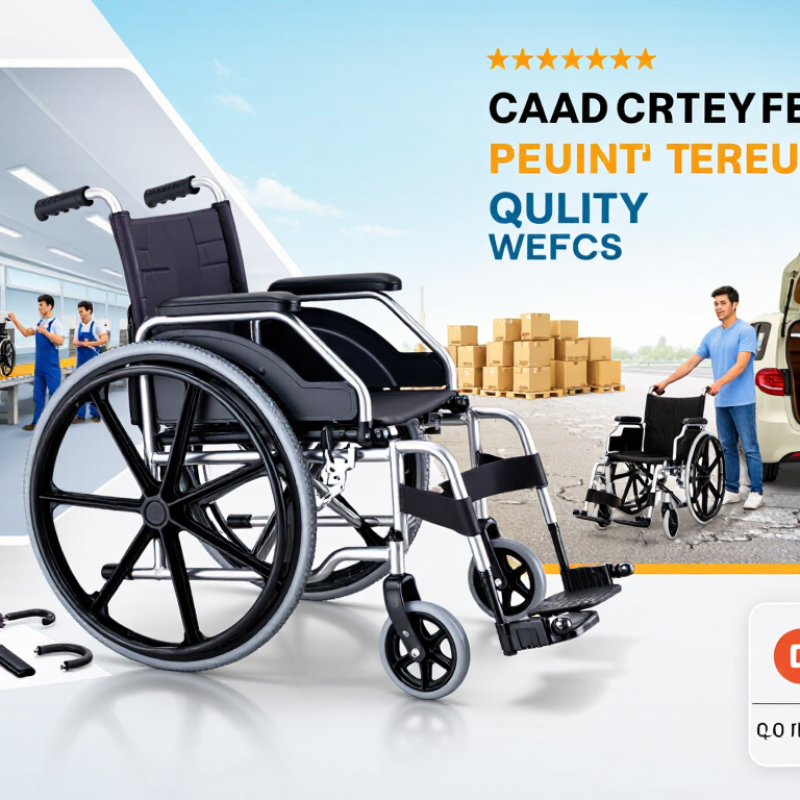
What makes a travel wheelchair supplier the best in China? Reliable evidence matters more than polished catalogs. The WHO and UNICEF Global Report on Assistive Technology estimates that over 2.5 billion people need assistive products worldwide. This number may reach 3.5 billion by 2050. That demand requires suppliers with practical engineering, not only low prices.
A capable supplier should provide load testing, brake checks, folding-cycle records, and traceable material documents. ISO 7176 testing can help assess wheelchair stability, durability, and braking performance. Ask for recent test reports, factory inspection records, and clear explanations of their methods. During sampling, inspect the frame joints, wheel alignment, seat tension, and folded size. A suitcase should fit beside it. The wheels should roll smoothly across airport flooring. Small details matter.
After-sales support also reveals supplier quality. The supplier should offer spare wheels, brake cables, cushions, and repair guidance. Response time should be measured, not promised. The best teams explain limitations honestly, including weight capacity, uneven-ground performance, and battery restrictions when applicable. No supplier is perfect. I would question any factory claiming zero defects. Independent inspections, documented corrective actions, and consistent batch quality create stronger trust. A China-based supplier becomes truly dependable when engineering records match real handling experience.
| Evaluation Dimension | Recommended Benchmark | Why It Matters for Travel Use | Evidence to Request | Suggested Weight |
|---|---|---|---|---|
| Applicable Product Standard | Design and testing aligned with ISO 7176 or EN 12183, where applicable | Supports consistent testing of wheelchair performance, stability, durability, and safety | Test reports, technical file, declaration of conformity, and applicable market documents | 15% |
| Folded Portability | Folded dimensions and mass clearly stated; target total mass commonly below 25 kg for travel-oriented models | A compact, manageable design is easier to place in vehicles, storage areas, and airport handling systems | Verified dimension sheet, weighing record, folded-product photographs, and packing list | 15% |
| Maximum User Weight | A clearly documented load rating, commonly in the 100–150 kg range depending on model design | Ensures safe operation and prevents unsuitable product positioning | Instruction manual, label photographs, load-test report, and product specification sheet | 10% |
| Driving Range | Published range under defined test conditions; many compact powered models target approximately 10–25 km per charge | Travel users need predictable battery performance for terminals, hotels, and short outdoor journeys | Range-test method, battery capacity, test load, terrain, temperature, and speed conditions | 10% |
| Battery and Air-Travel Support | Battery chemistry, watt-hour rating, removable-battery procedure, and transport documentation clearly provided | Airlines and transport operators may impose specific requirements for lithium batteries and mobility aids | UN 38.3 test summary for applicable lithium batteries, SDS, battery label, and airline handling instructions | 15% |
| Charging System | Charger input compatible with destination markets, such as 100–240 V AC, with the correct plug configuration | Reduces charging problems when users travel internationally | Charger label, electrical safety report, plug options, charging time, and replacement-charger availability | 5% |
| Safety and Stability | Effective braking, anti-tip protection where required, secure seating, and documented slope or stability testing | Travel environments include ramps, uneven surfaces, transfers, and frequent stops | Brake test results, stability test data, user manual, risk assessment, and sample inspection | 15% |
| Quality-Control Process | Incoming-material inspection, in-process checks, final inspection, and traceable serial or batch records | Documented controls reduce variation between production batches | Quality manual, inspection checklist, corrective-action records, and pre-shipment inspection report | 10% |
| After-Sales Support | Written warranty, spare-parts list, troubleshooting guide, and defined response process | Reliable support is important when a mobility device is used away from home | Warranty terms, parts availability statement, service-level targets, and repair procedure | 10% |
| Export and Packaging Capability | Export-ready packaging, moisture protection, shock protection, accurate carton markings, and documented shipping experience | Protects the wheelchair during international transport and simplifies receiving procedures | Packaging specification, carton drop-test information, shipping photos, and export documentation samples | 5% |
| Total Evaluation Weight | 100% | |||
A lightweight folding frame fits car trunks, train aisles, and hotel corners. Compact storage matters.
Firm locking brakes, stable armrests, adjustable footrests, and anti-tip supports reduce movement risks. Test every feature before travel.
They reduce interruptions on uneven pavements, airport walkways, and rough hotel entrances. No tire solves every surface problem.
Review the battery type, specifications, and airline requirements carefully. Policies differ between carriers and destinations. Never assume.
Inspect welds, axle alignment, folding joints, and brake response. A polished finish can hide weak construction.
Check seat width, back height, cushion firmness, and armrest position. After thirty minutes, pressure near the hips may appear.
One caregiver should lift it into a vehicle and operate the folding mechanism. Handles should feel secure, not awkward.
Ask for material details, load-testing records, inspection dates, instructions, warranty terms, and replacement-part plans. Vague answers deserve caution.
It can reveal loose brakes, difficult folding, poor tire grip, or uncomfortable seating. My earlier review missed brake access with gloves.
Not always. Lower weight may reduce cushioning or rigidity, so buyers should consider the trade-off honestly.
Choosing the best Frido Travel Wheelchair supplier in China requires more than comparing prices. A reliable supplier should provide lightweight, foldable, and durable wheelchairs designed for airports, vehicles, hotels, and everyday mobility. Key considerations include frame strength, smooth maneuverability, reliable brakes, comfortable seating, adjustable support, battery or manual operation options, and a compact design that is easy to transport and store. Product quality should be verified through material inspections, safety testing, durability checks, and clear documentation.
Buyers should also compare suppliers by manufacturing experience, quality control procedures, communication, delivery reliability, warranty coverage, replacement parts, and after-sales support. Customization options, such as seat dimensions, colors, accessories, control systems, and packaging, may be important for different users or business requirements. By assessing product performance, user comfort, supplier services, and customization flexibility together, customers can select a dependable Frido Travel Wheelchair supplier that offers suitable mobility solutions and long-term value.