0%

Choosing the best China Wheelchair Rear Wheel supplier requires more than comparing online prices. A reliable supplier should understand wheelchair balance, user safety, and daily movement. The right Wheelchair Rear Wheel can improve rolling comfort, stability, and control on different surfaces. Small details matter, including rim shape, axle fit, tire material, spoke tension, and surface finishing.

Real product experience helps reveal what specifications cannot show. A serious manufacturer should provide clear drawings, material details, sample testing, and consistent quality records. Ask how the wheels perform after repeated loading, outdoor exposure, and frequent braking. Request production photos, inspection reports, and customer references where available. Factory communication also matters. Answers should be specific, not vague promises.

No supplier is perfect. That deserves attention. Some manufacturers offer strong engineering but slower customization. Others provide fast production yet limited after-sales support. Buyers should compare these weaknesses honestly. A professional supplier explains tolerances, packaging methods, warranty terms, and delivery risks before accepting an order. Independent testing can add confidence, especially for hospitals, distributors, and mobility equipment brands.

This guide examines leading China Wheelchair Rear Wheel suppliers through practical criteria. It considers manufacturing experience, technical capability, material consistency, customization options, quality control, and service reliability. The goal is not to promote the cheapest option. It is to identify a supplier that can deliver safe, durable, and properly fitted wheelchair wheels over time. Performance should be verified, not assumed.
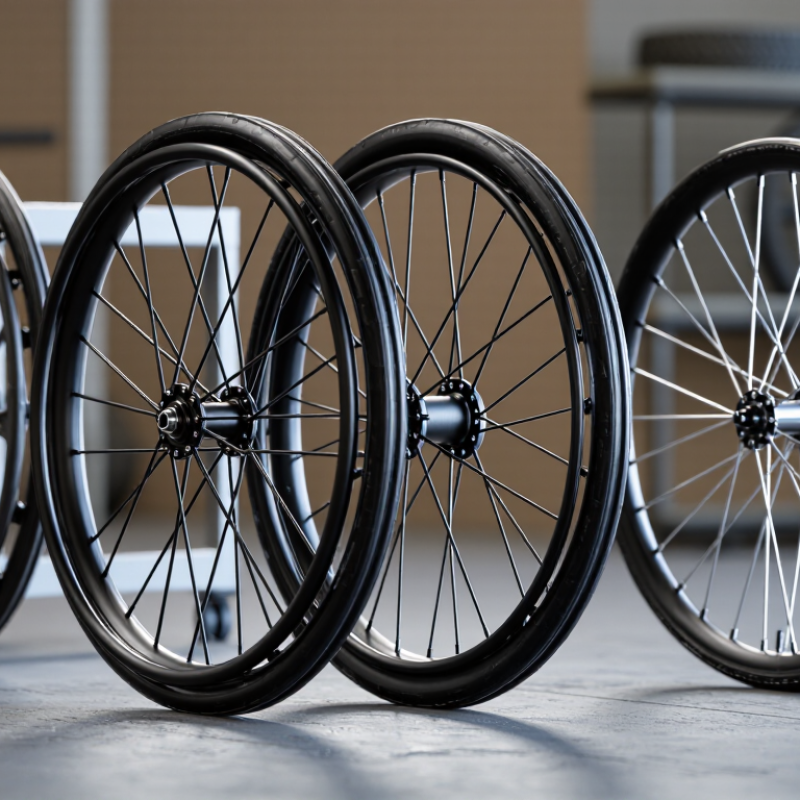
Who Is the Best China Wheelchair Rear Wheel Supplier?

What Makes a China Wheelchair Rear Wheel Supplier the Best Choice?

The best China wheelchair rear wheel supplier is not defined by price alone. It is defined by consistent performance, careful engineering, and dependable communication. Experienced suppliers understand how wheel diameter, handrim position, axle fit, and tire pressure affect daily mobility. They should explain these details clearly, not hide behind technical language.

A professional supplier provides material records, inspection reports, and practical testing evidence. Rear wheels should be checked for alignment, spoke tension, bearing smoothness, and load stability. Reliable production also requires traceable batches and clear replacement procedures. A small tolerance error can cause wobbling, noise, or difficult steering. These problems may seem minor during assembly, but users notice them quickly. No supplier is perfect. Honest factories admit limitations and improve their process after customer feedback.

Tips: Ask for product samples before large orders. Check whether the wheel fits your frame and axle system. Request test data for load capacity and corrosion resistance. Review packaging details, because damaged rims often result from poor internal protection. Compare response quality, not only quotations. A supplier that answers precisely is usually easier to work with later. Still, one successful sample does not prove long-term consistency. Request follow-up inspections and keep written specifications for every order.

Key Standards for Evaluating Wheelchair Rear Wheel Manufacturers

Who Is the Best China Wheelchair Rear Wheel Supplier?

The best supplier is not simply the one offering the lowest quotation. Evaluate the manufacturer against clear performance standards. Check wheel diameter, axle compatibility, bearing quality, and frame clearance. A reliable factory should provide material specifications and inspection records. Aluminum rims should resist deformation during repeated use. Rubber tires should maintain grip on smooth floors and outdoor paths. Ask for load testing under realistic conditions. A sample often reveals more than a polished catalog.

Production consistency also matters. Review the supplier’s quality control process, traceability system, and defect handling procedure. Confirm whether each batch receives dimensional and spin testing. Packaging deserves attention too. Bent rims and scratched surfaces can appear after long-distance transport. Request photos before shipment and verify the warranty in writing. No supplier is perfect. Even experienced manufacturers may overlook small fitting differences between wheelchair models. That is why trial assembly remains essential.

Tips: Compare at least three samples. Measure axle holes yourself. Test braking clearance and rolling smoothness. Ask how rejected parts are recorded. A vague answer is a warning sign. Look for stable communication, practical engineering support, and documents that match the actual product.

Who Is the Best China Wheelchair Rear Wheel Supplier?

Key standards for evaluating wheelchair rear-wheel manufacturers include dimensional accuracy, compatibility, safety-test documentation, material quality, and production traceability. The chart below shows common nominal rear-wheel diameter options used for manual wheelchairs. Actual outside diameter may vary according to tire construction and inflation.

A reliable supplier should clearly specify the nominal wheel diameter, rim and tire compatibility, axle configuration, load-rating information, and applicable wheelchair testing documentation such as ISO 7176-related evidence. Buyers should verify production samples against approved drawings before placing bulk orders.

Leading China Suppliers and Their Product Capabilities

Choosing the best China wheelchair rear wheel supplier depends on product fit, not factory size. Experienced suppliers usually offer 20, 22, and 24-inch rear wheels for different wheelchair frames. They may provide aluminum rims, stainless steel spokes, pneumatic tires, or solid PU tires. These details affect weight, comfort, rolling resistance, and maintenance.

Reliable manufacturers should explain their production process clearly. Ask about hub machining, spoke tension, rim alignment, and handrim installation. A capable supplier can normally support custom axle sizes, powder-coated finishes, and left or right wheel configurations. Quality checks should include radial runout, load testing, brake clearance, and packaging strength. Requesting a sample is essential. Photos are not enough.

Some suppliers also offer OEM development, small-batch production, and replacement parts. This helps distributors serve rehabilitation centers and wheelchair users with varied needs. However, capability claims require evidence. A polished catalog does not prove consistent output. I would review inspection records, sample measurements, material certificates, and customer feedback before placing a large order. Even strong factories can miss details during busy seasons. That risk deserves discussion, not silence. Clear drawings, defined tolerances, and written inspection standards can reduce avoidable problems. Reliability is built through repeatable work, responsive communication, and honest limits.

Who Is the Best China Wheelchair Rear Wheel Supplier? — Leading China Suppliers and Their Product Capabilities
Anonymous Supplier Profile Primary Product Focus Common Wheel Sizes Rim and Tyre Options Spoke Configuration Axle and Hub Compatibility Typical Materials Quality and Testing Capability Indicative MOQ Indicative Lead Time Customization Capability
Supplier Profile A
High-volume standard wheels
Standard rear wheels for manual wheelchairs and transit chairs 20 in 22 in 24 in Aluminium alloy rims; solid PU, pneumatic, or high-pressure tyres 24, 36, or 48 stainless-steel spokes Common 12 mm and 1/2 in axle bore options; detachable and fixed hubs 6061-series aluminium rim options; stainless-steel spokes; aluminium or steel hubs Dimensional inspection, spoke-tension checks, brake-clearance checks, and rolling tests 50–100 sets for standard specifications 25–40 days after order confirmation Colour, tyre type, spoke count, hub width, packaging, and logo-free private-label packaging
Supplier Profile B
Lightweight performance wheels
Lightweight self-propelled wheelchair wheels designed to reduce rotating mass 22 in 24 in 25 in Double-wall alloy rims; pneumatic or lightweight solid tyres 24 or 36 butted or standard stainless-steel spokes Quick-release hub systems and standard axle-hole configurations Heat-treated aluminium alloy rims; stainless-steel or aluminium hubs Run-out measurement, wheel balance, load cycling, corrosion checks, and assembly inspection 30–80 sets for catalogue models 30–45 days, depending on hub and rim configuration Rim finish, spoke pattern, hub colour, push-rim position, and wheel offset
Supplier Profile C
Heavy-duty wheelchair wheels
Reinforced rear wheels for bariatric and high-load manual wheelchairs 20 in 22 in 24 in Reinforced alloy or steel rims; pneumatic, solid rubber, or PU tyres 36 or 48 spokes with reinforced spoke nipples Extended hub widths and larger axle options available by drawing Reinforced aluminium or powder-coated steel rims; steel hubs and stainless-steel spokes Static load testing, rolling durability, spoke-tension checks, and brake-interface inspection 50–150 sets, depending on load rating and tyre selection 35–55 days for reinforced or non-standard assemblies Load rating, hub width, rim strength, tyre compound, axle bore, and mounting pattern
Supplier Profile D
Solid-tyre and maintenance-free wheels
Puncture-resistant rear wheels for institutional, hospital, and rental use 16 in 20 in 22 in 24 in Solid PU or solid rubber tyres mounted on alloy or steel rims 12, 24, or 36 spokes, depending on wheel diameter and load requirement Fixed hubs, bolt-on hubs, and selected quick-release configurations Polyurethane or rubber tyres; aluminium or coated steel rims; steel hub components Tyre adhesion, rolling resistance, dimensional accuracy, load cycling, and surface inspection 100–300 sets for standard solid-tyre assemblies 25–45 days for regular models Tyre hardness, tread pattern, rim colour, hub dimensions, and carton configuration
Supplier Profile E
OEM and drawing-based assemblies
Custom rear-wheel assemblies supplied to wheelchair manufacturers and distributors 16–26 in, subject to approved technical drawing Custom pneumatic, solid, PU, or high-pressure tyre systems Spoke count, gauge, nipple type, and lacing pattern specified by project Custom hub width, axle bore, quick-release pin, offset, and mounting interface Aluminium, steel, stainless steel, engineering plastics, and elastomer components First-article inspection, control plans, traceability, material certificates, and agreed endurance tests 200–1,000 sets for project-based production 45–75 days after sample and drawing approval Highest customization level, including tooling, assembly fixtures, packaging, and inspection plans
Data note: The specifications above describe commonly available capability ranges in China’s wheelchair component market. Actual wheel size, load rating, axle interface, testing scope, minimum order quantity, and production lead time should be confirmed against the supplier’s current technical drawing, sample, and quotation.

Quality, Safety, Customization, and Certification Considerations

Who Is the Best China Wheelchair Rear Wheel Supplier?

The best supplier is not simply the one offering the lowest quotation. The WHO and UNICEF Global Report on Assistive Technology estimates that more than 2.5 billion people need assistive products worldwide. Demand is growing, but quality cannot be treated as a volume game. Rear wheels should receive documented checks for rim alignment, axle fit, spoke tension, braking compatibility, and corrosion resistance. A small tolerance error can cause vibration, uneven rolling, or unsafe transfers.

Safety evidence matters. ISO 7176-1 and ISO 7176-2 address wheelchair stability, while ISO 7176-8 covers static, impact, and fatigue strength testing. Ask suppliers for current, traceable reports linked to the exact wheel configuration. General factory certificates are not enough. Testing should reflect the user’s weight, terrain, tire pressure, and repeated loading. That distinction is often missed.

Customization should remain practical. Suppliers may adjust rim diameter, handrim position, hub width, axle type, spoke count, tire profile, and surface finish. However, every change can affect balance and structural performance. A polished sample can still hide inconsistent production. Batch inspection, material records, dimensional reports, and corrective-action records reveal more than photographs. No checklist catches everything. Buyers should also inspect packaging, because bent rims and damaged axles can begin with poor internal protection. A dependable supplier communicates clearly, admits limitations, and supports repeatable quality rather than promising perfection.

How to Select the Right Supplier for Your Wheelchair Needs

Choosing the right China wheelchair rear wheel supplier requires more than comparing prices. Fit comes first. Confirm the axle diameter, hub width, wheel size, handrim position, and load capacity. A small mismatch can cause wobbling, difficult installation, or unsafe handling.

Ask the supplier for clear drawings, material specifications, and recent product samples. Inspect the rim finish, spoke tension, bearing movement, and tire grip on smooth and uneven floors. Test it. A reliable supplier should explain production steps, inspection methods, packaging protection, and replacement procedures. Experience matters here, because practical details often reveal more than a polished catalog.

I once focused too heavily on unit cost and overlooked inconsistent spoke tension. That decision created extra fitting work later. A better supplier provides batch records, dimensional checks, and documented quality controls. Review communication speed, technical answers, sample accuracy, and delivery reliability. Ask whether the same specifications can be maintained across repeated orders. Request a written warranty and clarify how defects are handled. Certifications may support trust, but they should not replace physical inspection. An honest supplier will also admit limitations, such as longer lead times for custom hubs or limited testing data. Supplier selection is not always perfect. Leave room for a trial order, user feedback, and a second inspection before committing to large quantities.

FAQS

What makes a reliable wheelchair rear wheel supplier?

A reliable supplier provides accurate specifications, inspection records, and practical technical support. Price alone is not enough. Ask for samples, drawings, and load-testing details.

Which measurements should be checked before ordering?

Check axle diameter, hub width, wheel diameter, handrim position, and frame clearance. Small differences can cause wobbling or difficult installation. Measure the axle holes yourself.

Why are product samples important?

Samples reveal details that catalogs may hide. Inspect the rim finish, spoke tension, bearing movement, and tire grip. A sample tells the truth.

How can wheel quality be tested?

Test rolling smoothness on smooth and uneven floors. Check braking clearance and spin movement. Ask for dimensional testing and realistic load testing.

What materials and features deserve attention?

Aluminum rims should resist bending during repeated use. Rubber tires should maintain grip indoors and outdoors. Bearings should move smoothly without rough sounds.

How can production consistency be evaluated?

Ask about batch records, traceability, dimensional checks, and defect handling. Confirm whether specifications remain stable across repeated orders. Consistency can fail quietly.

What should be checked before shipment?

Request shipment photos and inspect packaging protection. Long-distance transport may bend rims or scratch surfaces. Confirm the warranty and replacement process in writing.

Are certifications enough to confirm quality?

Certifications can support trust, but they cannot replace physical inspection. Compare at least three samples when possible. Documents may look better than reality.

What warning signs suggest supplier risk?

Vague answers about rejected parts or testing deserve caution. Slow technical replies may create fitting problems later. Custom hubs may require longer lead times.

Should a buyer place a large order immediately?

A trial order is safer than immediate bulk purchasing. Review user feedback and perform a second inspection. I once focused on cost and missed uneven spoke tension. That mistake created extra fitting work.

Conclusion

Choosing the best China Wheelchair Rear Wheel supplier requires more than comparing prices. A dependable supplier should demonstrate consistent manufacturing quality, precise engineering, durable materials, and strict safety controls. Important evaluation standards include production experience, quality inspection procedures, load-bearing performance, compatibility with different wheelchair models, and the ability to maintain stable delivery times. Suppliers with strong technical capabilities should also offer options for wheel size, rim design, tire type, axle configuration, and surface finishing to meet different mobility requirements.

Quality, safety, customization, and certification are essential considerations when selecting a Wheelchair Rear Wheel manufacturer. Buyers should review product specifications, testing records, material details, warranty terms, and communication support before making a decision. The right supplier should understand the intended use of the wheelchair, provide clear technical guidance, respond efficiently to customization requests, and maintain reliable after-sales service. By comparing these factors carefully, customers can choose a capable partner that provides safe, durable, and suitable wheelchair components for long-term use.

Victoria

Victoria

Victoria is a professional marketing specialist dedicated to helping businesses understand products, markets, and customer needs with clarity and confidence. With extensive knowledge of the company’s solutions, she combines strategic insight, industry research, and practical communication skills to......