0%

Choosing the right Manual Folding Wheelchair in 2026 involves more than comparing prices and product photographs. Global buyers must examine frame strength, folding size, seat width, transport weight, braking systems, and daily usability. A chair that folds neatly into a car may still feel unstable on uneven pavement. Small details matter.

This guide introduces the main manual folding wheelchair types available for international purchasing. It considers lightweight aluminum models, standard transit chairs, self-propelled wheelchairs, reclining designs, and reinforced options for heavier users. Each type serves a different situation. Airport transfers, indoor mobility, community travel, and long-term home use require different priorities.

Practical experience shows that product descriptions rarely tell the whole story. Wheel diameter, tire material, footrest design, cushion support, and folding-lock quality can change the user’s experience considerably. Buyers should request clear measurements, load testing information, maintenance guidance, and real product photographs before making decisions. Supplier verification also matters, especially when after-sales support crosses borders.

There is no perfect model.

A lightweight frame may reduce carrying effort but offer less cushioning. A stronger chair may provide better stability but increase shipping weight. These trade-offs deserve honest attention. This overview uses practical selection criteria and professional mobility considerations to help buyers compare options responsibly. However, individual posture, transfer ability, health needs, and local service access should still be assessed by qualified professionals. Some recommendations may require refinement, because user conditions and market standards continue to change.
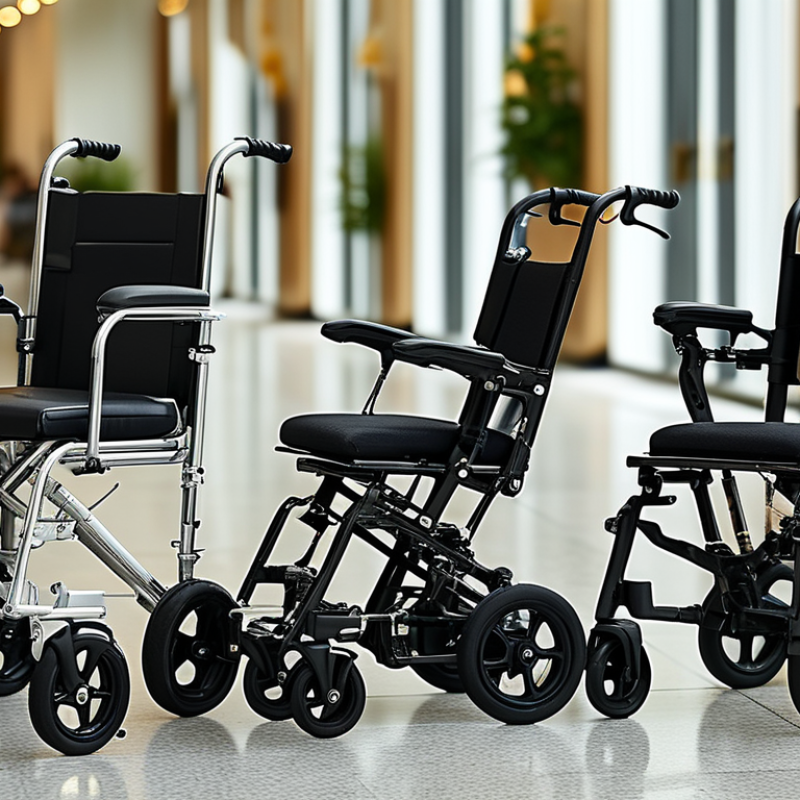
2026 Top Manual Folding Wheelchair Types for Global Buyers

Manual Folding Wheelchair Basics: WHO Estimates 2.5 Billion Need Assistive Products by 2030

Manual folding wheelchairs matter in a rapidly expanding assistive-technology market. The WHO and UNICEF Global Report on Assistive Technology estimates that 2.5 billion people may need assistive products by 2030. WHO also reports that more than 1.3 billion people currently experience significant disability. These figures show why practical wheelchair selection requires more than comparing prices.

A folding wheelchair usually uses a cross-brace frame. Common types include standard models, lightweight models, transit chairs, and reclining versions. Standard frames often suit daily indoor use and supervised outdoor trips. Lightweight frames reduce lifting effort during car transfers. Transit models usually have smaller wheels and require an attendant. Reclining designs can support posture changes, but they need more space and careful adjustment.

Fit comes first.

WHO wheelchair-provision guidance emphasizes assessment, pressure management, posture, and user training. Buyers should check seat width, seat depth, footrest position, brake access, and folded size. A chair that fits a vehicle may still feel unstable outdoors. Aluminum can reduce weight, yet it may not solve poor balance or unsuitable seating. ISO 7176 testing addresses wheelchair safety and performance, but laboratory results cannot replace real-world trials. This is an imperfect point: many purchasing decisions still rely on photographs. Ask for measurements, service information, spare-part access, and a trial whenever possible.

Standard Folding Wheelchairs: ISO 7176 Tests Frame Size, Mass, and Stability

For global buyers, a standard folding wheelchair should be judged beyond its folding mechanism. ISO 7176 testing offers a useful technical reference for frame size, mass, strength, and stability. Applicable parts may measure overall dimensions, seat dimensions, turning space, and unloaded or loaded mass. These details affect shipping, storage, vehicle access, and daily handling.

A practical inspection starts with the frame. Check the folded length, width, and height beside the available storage area. Measure the seat width, seat depth, and footrest position against the user’s body, not only the product sheet. A chair that feels compact may still create uncomfortable knee pressure. It happens more often than expected. Confirm the stated mass with removable parts included or excluded. Packaging weight can also confuse purchasing calculations.

Stability testing is equally important. ISO 7176 procedures can evaluate resistance to tipping under defined loading and surface conditions. Buyers should review whether tests reflect rearward, forward, and lateral stability. A stable chair on a smooth test surface may behave differently near a curb or sloped entrance. Examine wheelbase, caster position, brake access, and frame rigidity during a hands-on trial. Folded joints deserve close attention, too. Small looseness can become noticeable after repeated transfers. Test reports improve confidence, but they cannot replace a careful fit assessment and realistic route review.

Lightweight and Ultralight Models: Compare Materials, Weights, and Portability

Lightweight manual wheelchairs usually use aluminum, titanium, or carbon-fiber components. Aluminum models often weigh about 9–15 kilograms, while ultralight designs may fall below 10 kilograms. Titanium can improve durability, but it usually costs more. Carbon fiber reduces weight further, yet repairs and replacement parts may be less accessible.

The WHO and UNICEF Global Report on Assistive Technology, published in 2022, estimates that more than 2.5 billion people need at least one assistive product. Access remains uneven worldwide. This makes practical portability important, not merely attractive. Current technical catalogs show that steel folding chairs commonly exceed 14 kilograms. That difference matters when lifting a chair into a car or carrying it up three steps.

Wheel size also changes portability. Small rear wheels create a shorter folded profile, while self-propelled wheels improve independence but add bulk. A compact frame can fit beside a 55-centimeter suitcase. Check the folded height, width, and lifting points before comparing advertised weights. ISO 7176 testing supports more consistent wheelchair performance checks, but it does not replace a hands-on fitting. A chair weighing 8 kilograms may still feel awkward if its center of gravity is poorly balanced. Weight is not everything. Transport users should test folding, lifting, braking, and footrest removal. I would also question very low advertised weights, because cushions, rear wheels, and safety accessories may be excluded.

2026 Top Manual Folding Wheelchair Types for Global Buyers - Lightweight and Ultralight Models: Compare Materials, Weights, and Portability
Wheelchair Type Typical Frame Material Typical Net Weight Folded Width Range Typical Weight Capacity Portability Profile Best Suited For Key Buying Considerations
Transit Transport Wheelchair Aluminum alloy frame with compact components 8–12 kg 25–32 cm 90–120 kg Very easy to lift, store, and place in a vehicle; generally pushed by an attendant Air travel, shopping centers, airports, clinics, and short assisted trips Usually has small rear wheels and limited self-propulsion; verify brake access and seat width
Lightweight Self-Propelled Folding Wheelchair Anodized aluminum alloy 11–15 kg 30–36 cm 100–136 kg Good balance between independent use and vehicle transport Daily indoor use, paved outdoor routes, and independent short-distance mobility Large rear wheels improve control but add weight; check wheel-release and folding mechanisms
Ultralight Self-Propelled Folding Wheelchair Aircraft-grade aluminum alloy or aluminum-lithium alloy 7–11 kg 28–34 cm 90–125 kg Excellent liftability and compact storage while retaining large rear wheels Frequent travelers and active users who need independent propulsion Lower weight can reduce adjustment options; confirm center-of-gravity stability and spare-part availability
Carbon-Fiber Folding Wheelchair Carbon-fiber composite frame with aluminum hardware 6–10 kg 27–34 cm 90–120 kg Among the easiest manual chairs to carry; highly suitable for frequent transport Users prioritizing minimum lifting weight, travel convenience, and premium portability Usually costs more; inspect impact protection, repair options, and maximum user weight
Compact Pediatric Folding Wheelchair Lightweight aluminum alloy with adjustable seating components 8–13 kg 24–31 cm 45–90 kg Compact and manageable for caregivers; designed around smaller seat dimensions Children and adolescents requiring a growing or adjustable seating system Seat depth, footrest adjustment, pelvic positioning, and growth allowance are essential
Heavy-Duty Folding Wheelchair Reinforced steel or high-strength aluminum alloy 17–25 kg 34–43 cm 140–225 kg Foldable but substantially heavier; vehicle loading may require two people or a ramp Users requiring a wider seat, reinforced structure, and higher load capacity Check frame certification, axle strength, seat width, turning clearance, and transport dimensions
Tilt-in-Space Folding Wheelchair Reinforced aluminum alloy or steel with reclining and tilt hardware 18–30 kg 35–45 cm 100–160 kg Moderate portability; additional positioning mechanisms increase weight and folded size Users needing pressure management, postural support, or assisted repositioning Confirm occupied-seat stability, pressure-relief compatibility, head support, and caregiver handling
Sports and Active Folding Wheelchair Lightweight aluminum alloy or titanium alloy 8–14 kg 28–35 cm 90–125 kg Easy to lift and maneuver; typically optimized for active propulsion rather than maximum adjustability Active users, sports participation, and efficient movement on smooth outdoor surfaces Review camber, seat angle, axle position, anti-tip protection, and transport durability
One-Arm-Drive Folding Wheelchair Aluminum alloy frame with differential drive components 14–20 kg 32–40 cm 100–136 kg Portable but heavier than basic ultralight models because of specialized drive hardware Users with limited function in one arm who need manual indoor mobility Requires practice and sufficient upper-body control; evaluate wheel access and service complexity
Reference note: Weight, folded dimensions, and weight capacity are typical market ranges for manual folding wheelchair categories. Actual specifications vary by seat width, wheel size, footrests, cushions, frame configuration, and optional accessories. Always verify the final technical specification before purchase or import.

Transit and Transport Wheelchairs: Apply ISO 7176-19 Crash-Safety Requirements

For global buyers, “transit” and “transport” wheelchairs need careful interpretation. These terms are not always used consistently across markets. A transport-ready folding wheelchair should be evaluated against ISO 7176-19, which addresses wheelchair seating during motor-vehicle travel. It is not a general quality certificate. It is a safety test framework.

The standard examines a wheelchair, occupant restraint, and tiedown system during a controlled frontal impact. Buyers should request test evidence for the exact configuration, including frame size, seating system, and accessories. A four-point tiedown may secure the chair, while a separate pelvic and upper-body restraint protects the passenger. Brakes alone are not vehicle restraints. That mistake still appears in product listings.

Demand is expanding. The WHO and UNICEF Global Report on Assistive Technology estimates that more than 2.5 billion people need assistive products, potentially reaching 3.5 billion by 2050. This strengthens the case for reliable transport specifications, not vague marketing language. Check whether the chair is approved for occupant seating during travel, rather than merely foldable and lightweight. Ask for dynamic-test documentation, installation instructions, user weight limits, and inspection guidance. Real-world compatibility can still differ from laboratory results. Even a compliant chair needs correct positioning, undamaged restraints, and trained installation staff. Small details matter.

2026 Manual Folding Wheelchair Types for Global Buyers

ISO 7176-19 dynamic crash-safety testing uses key reference conditions for wheelchairs intended for use as seats in motor vehicles.

The reference test conditions include a 48 km/h frontal impact speed, approximately 20 g peak deceleration, and a 50 ms deceleration pulse. Standard, lightweight, transport, and reclining folding wheelchairs must be assessed as complete wheelchair-and-tiedown configurations; a folding design alone does not confirm ISO 7176-19 compliance. Buyers should request a test report for the specific model and configuration.

Global Buyer Selection: Match Terrain, User Needs, Standards, and Local Access rules

For global buyers, manual folding wheelchairs should be selected by route, user, and local access conditions—not by folded size alone. A standard self-propelled model suits independent users on smooth indoor floors and moderate outdoor paths. A lightweight folding type helps with car transfers, stairs, and frequent handling. Transit models need trained assistance and secure transport points. Reclining or tilt features may support posture, but they add weight, maintenance, and fitting decisions. Terrain changes everything. Pneumatic tires can soften rough ground, while solid tires reduce puncture concerns on busy streets.

Ask who pushes, where the chair travels, and how often it folds. Measure seat width, seat depth, foot support, brake reach, and doorway clearance. A narrow chair may pass a 650-millimeter doorway but feel unstable outdoors. A heavier frame may feel safer on uneven paving, yet burden a caregiver during vehicle loading. These trade-offs are easy to underestimate. Try a sample chair with the actual cushion and footwear. That detail matters.

Before purchase, check applicable medical-device standards, test reports, labeling, and importer documents. ISO 7176 references can guide performance questions, but local authorities may require additional conformity evidence. Confirm rules for public transport, building ramps, curb cuts, and wheelchair dimensions. Requirements differ between countries and sometimes between cities. Ask suppliers for current documents, not screenshots or old certificates. Inspect folding joints, wheel locks, welds, and spare-part access. No checklist is perfect. Even experienced teams can overlook the return route after a trial fitting.

FAQS

What is a manual folding wheelchair?

It usually has a cross-brace frame that folds for storage and transport. It is practical, but folding does not guarantee easy handling.

Which wheelchair type suits daily indoor use?

A standard model often works for independent indoor movement and supervised outdoor trips. Smooth floors help.

When is a lightweight wheelchair useful?

It reduces lifting effort during car transfers, stair handling, and frequent loading. It may still feel unstable outdoors.

Who should use a transit wheelchair?

An attendant should push it. Smaller rear wheels usually prevent independent self-propelling.

What measurements should buyers check?

Check seat width, seat depth, footrest position, brake reach, folded size, and doorway clearance. Measure twice.

Does a smaller folded size mean a better wheelchair?

No. A narrow chair may fit a 650-millimeter doorway but feel unstable on uneven paving.

Can folding wheelchairs be used during vehicle travel?

Only when the exact configuration has suitable dynamic-test evidence and approved tiedown instructions. Brakes are not vehicle restraints.

What safety details matter during transport?

Use a four-point tiedown with separate pelvic and upper-body restraints. Correct positioning and trained installation remain essential.

Do laboratory test results guarantee real-world safety?

No. Testing cannot fully reproduce rough paths, tight doorways, poor positioning, or damaged restraints. Real-world trials still matter.

What should global buyers request before purchasing?

Request measurements, weight limits, service details, spare-part access, current certificates, and installation guidance. Screenshots are not enough.

How do tires affect outdoor performance?

Pneumatic tires can soften rough ground. Solid tires reduce puncture concerns on busy streets.

What is easy to overlook during selection?

Buyers may forget the return route after a fitting trial. No checklist catches everything.

Conclusion

Manual Folding Wheelchair options are expanding as global demand for safe, practical mobility equipment grows. With the WHO estimating that 2.5 billion people may need assistive products by 2030, buyers should understand the differences among standard, lightweight, ultralight, transit, and transport models. Standard folding wheelchairs generally prioritize durability, adjustability, and everyday comfort, while lightweight and ultralight designs focus on easier lifting, storage, and transportation. Material selection, total weight, folding dimensions, seat support, and user strength all influence portability and usability.

Safety and suitability should guide every purchase. ISO 7176 testing can help buyers compare frame dimensions, mass, stability, and performance, while ISO 7176-19 requirements are especially important for wheelchairs intended for vehicle transportation. Global buyers should also evaluate terrain, climate, access conditions, maintenance resources, user posture, caregiver support, and local mobility regulations. Matching the wheelchair to real-life environments and recognized safety standards helps improve reliability, comfort, and long-term value.

Amelia

Amelia

Amelia is a dedicated marketing professional with a strong understanding of the company’s products, customers, and industry landscape. Through her work, she combines strategic insight with clear, practical communication to help readers make informed decisions and discover solutions that support......