0%

Choosing the best Wheelchair Front Wheel in 2026 is not about selecting the largest or newest option. It is about matching the wheel to real movement. Indoor users may value smooth turning across polished floors. Outdoor users may need stronger casters for cracked sidewalks, gravel, and uneven ramps.

Rory Cooper, PhD, a respected wheelchair researcher and founder of the Human Engineering Research Laboratories, has said, “A wheelchair is not a medical device; it is a mobility device.” That perspective matters here. A front wheel affects rolling comfort, stability, turning effort, and everyday independence. Small details matter. A wider pneumatic caster can soften vibration. A solid tire can reduce maintenance. A larger diameter may cross door thresholds more confidently.

But no single design fits every buyer. That is the difficult part. A lightweight caster may feel responsive indoors but less forgiving outdoors. A shock-absorbing model may improve comfort yet add weight and cost. Buyers should consider chair frame design, user weight, transfer habits, climate, storage space, and repair access.

Hands-on testing remains valuable. Push the chair over a doorway lip. Turn beside a kitchen counter. Notice whether the front wheels flutter at speed. Product specifications help, but they cannot show every real-world limitation. Even experienced buyers can overlook this.

This guide compares major Wheelchair Front Wheel types for 2026. It focuses on construction, terrain performance, maintenance, comfort, and practical value. The “best” choice may be less impressive on paper, but more dependable on Monday morning.
2026 Best Wheelchair Front Wheel Types for Buyers?

Wheelchair Front Wheel Types Explained for 2026 Buyers

Wheelchair Front Wheel Types Explained for 2026 Buyers

Choosing wheelchair front wheels starts with terrain, not appearance. Small solid casters turn sharply in tight indoor spaces. Larger pneumatic casters roll more smoothly over gravel and door thresholds. Their air pressure can change steering feel. Suspension casters reduce vibration on cracked sidewalks, but they add weight and maintenance. Fork angle, wheel diameter, tire width, and frame geometry may matter more than the wheel label.

The WHO and UNICEF Global Report on Assistive Technology (2022) estimates that over 2.5 billion people need at least one assistive product worldwide. It also reports uneven access to suitable equipment and services. That finding matters for buyers.

A replaceable tire, common bearing, and nearby repair support can protect daily mobility. ISO 7176 testing covers wheelchair stability, fatigue, and performance. However, laboratory results cannot reproduce every wet ramp or broken pavement. No chart predicts every doorstep. The choice is rarely perfect.

Tips: Test the wheelchair over a threshold, rough pavement, and a gentle ramp. Check whether the front wheels touch the footplates during tight turns. Ask about tire replacement, bearing access, and total added weight. Pneumatic wheels need pressure checks. Solid wheels need fewer repairs, but they may transmit more vibration. A therapist or qualified wheelchair assessor should confirm the final setup.

How Different Front Wheel Designs Affect Stability and Maneuverability

2026 Best Wheelchair Front Wheel Types for Buyers?

Front wheels strongly influence wheelchair stability, turning, and ride comfort. Small solid casters swivel quickly, making tight indoor turns easier. They work well on smooth floors, narrow hallways, and crowded rooms. However, they may catch on cracks or door thresholds. Larger solid casters roll over small obstacles more confidently. They can improve directional stability, but turning may require more space.

Pneumatic front wheels absorb vibration from rough paths, including paving joints and compact gravel. The ride feels less harsh. They also require regular pressure checks and puncture monitoring. That maintenance is easy to underestimate. Semi-pneumatic designs offer some cushioning without frequent inflation, although their comfort and traction can vary. No wheel design is perfect.

Wheel position matters as much as wheel size. A forward-positioned caster can improve obstacle clearance, but it may increase the risk of tipping during sudden stops. A shorter front frame often turns faster, yet it can feel less stable on uneven ground. Buyers should test the chair over ramps, thresholds, and sloped surfaces before choosing. A qualified seating professional can assess posture, weight distribution, and daily terrain. The best choice is not always the smoothest ride. It should match real routines, including outdoor travel, storage limits, and maintenance ability. I would also question showroom testing alone; polished floors can hide problems that appear immediately on cracked sidewalks.

Key Features to Compare Before Choosing Front Wheels

2026 Best Wheelchair Front Wheel Types for Buyers?

Choosing front wheels involves more than diameter. The right caster affects turning, vibration, stability, and daily maintenance.

WHO and UNICEF’s Global Report on Assistive Technology estimates that more than 2.5 billion people need assistive products worldwide. That figure makes practical wheelchair selection increasingly important.

Pneumatic front wheels absorb cracks well. They suit outdoor routes, gravel, and uneven sidewalks. However, they need pressure checks and can puncture.

Solid wheels require less attention and work reliably on smooth indoor floors. Hybrid wheels offer a useful compromise, but their comfort varies between models.

Larger casters usually roll over small obstacles more easily. Smaller casters can make tight indoor turns simpler. Measure doorway width before choosing.

Check the fork angle and bearing quality. A poorly aligned fork may cause fluttering at speed. Loose bearings can make a chair feel heavy, even with lightweight wheels. ISO 7176 testing covers wheelchair stability and performance, but laboratory results cannot reproduce every pavement. Real use matters.

A 2022 WHO wheelchair-provision guideline emphasizes assessment, fitting, training, and follow-up. Ask whether the wheels match your body weight, route, transfer method, and storage space.

On wet tiles, tread design may matter more than wheel size.

I once assumed larger wheels always meant better control. That was too simple. Some users may prefer a smaller, firmer caster after testing both options. Try several surfaces before deciding.

Best Front Wheel Types for Indoor, Outdoor, and Mixed Use

Choosing the best wheelchair front wheel depends on where the chair will travel most often. For indoor use, small solid caster wheels usually turn quickly around tables, doorways, and tight bathroom spaces. Their smooth surface resists punctures and needs little maintenance. However, they can catch on thick carpet or floor transitions. That detail is easy to underestimate.

Outdoor users often benefit from larger front wheels with a wider contact area. Pneumatic wheels can soften bumps on pavement, gravel, and uneven paths. Semi-pneumatic options offer some cushioning without frequent air checks. Solid outdoor casters are more dependable near sharp debris, but they may feel harsher over cracked sidewalks. Wheel size also affects turning effort and the chair’s front-end stability.

Mixed-use buyers need a practical compromise. Medium-sized solid or semi-pneumatic casters can handle indoor floors while remaining manageable outside. During a fitting, check whether the wheel clears footplates, rotates freely, and maintains contact on uneven ground. Sit in the chair and try ramps, thresholds, and slow turns. A wheel that looks suitable may still vibrate noticeably through the feet. I once underestimated doorway lips during testing; real homes expose weaknesses better than a showroom. Tire pressure, fork alignment, user weight, and chair setup all change performance. A therapist or qualified wheelchair technician can help match these details to daily routes and transfer needs.

How to Select the Right Wheelchair Front Wheels for Your Needs

How to Select the Right Wheelchair Front Wheels for Your Needs

Choosing wheelchair front wheels starts with your daily environment, not appearance. Small solid casters suit smooth indoor floors and need little maintenance. Larger pneumatic wheels handle cracks, gravel, and uneven paths more comfortably. However, air-filled tires may puncture and require regular pressure checks. Semi-pneumatic wheels offer a practical middle option, though they may feel less forgiving outdoors.

Think about wheel diameter, width, tread, and fork position. Larger casters usually roll over door thresholds more easily. Narrow wheels can turn neatly in tight rooms but may sink into soft ground. A softer tire can reduce vibration near the hands and feet. Yet, excessive softness may increase rolling resistance. That detail is easy to miss. Your chair’s total weight, seat height, and front-frame design also affect stability, so compatibility matters more than a single wheel feature.

Tips: Test the wheelchair on surfaces you actually use, including tiles, ramps, pavement, and carpet. Sit normally while turning and stopping. Listen for rattling. Check whether the front wheels lift during small threshold crossings. Ask a qualified wheelchair technician to confirm axle size, fork clearance, and load capacity. Review the wheels after several weeks, because initial comfort may change with wear. A perfect choice on paper can still feel awkward in real life.

2026 Best Wheelchair Front Wheel Types for Buyers

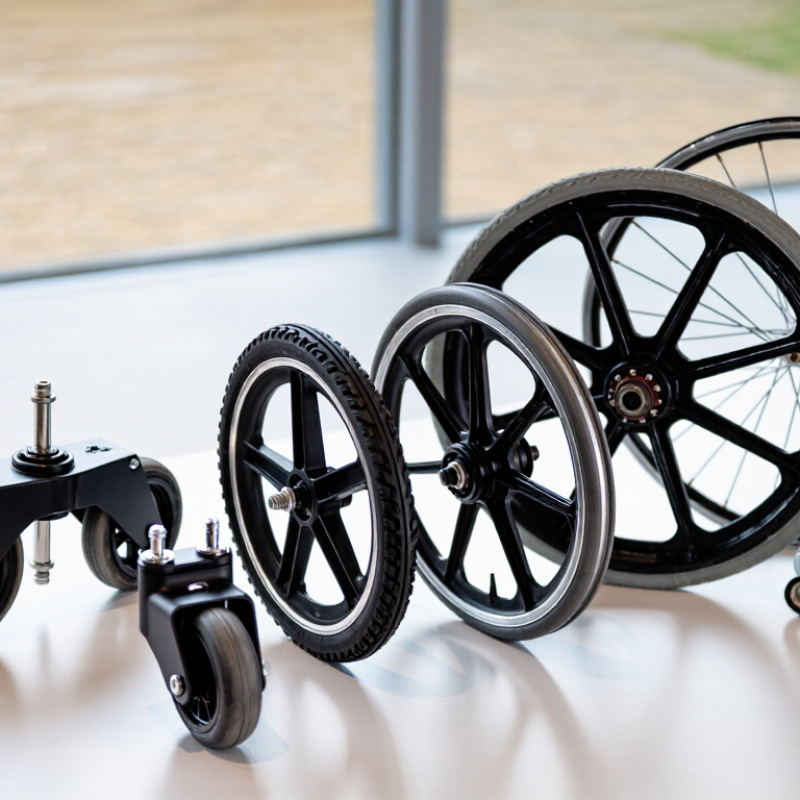
Typical front-wheel diameters vary by wheelchair design. Smaller casters are compact and easier to maneuver indoors, while larger or pneumatic wheels generally provide smoother handling on uneven outdoor surfaces.

How to choose: Select small solid casters for tight indoor spaces, medium casters for everyday mixed use, and larger solid or pneumatic wheels when outdoor comfort, surface clearance, and shock absorption are priorities. The figures show representative non-brand-specific sizes commonly used in wheelchair configurations.

FAQS

How do small solid front casters affect wheelchair movement?

They swivel quickly in narrow hallways, bathrooms, and crowded rooms. They need little maintenance. However, cracks, thick carpets, and door thresholds may stop them abruptly.

When are larger solid front wheels useful?

Larger wheels cross small thresholds and sidewalk cracks more confidently. They can improve directional stability. Tight turns may require extra space.

Do pneumatic front wheels provide a smoother ride?

Usually, yes. Air-filled tires reduce vibration on paving joints, gravel, and uneven paths. They need pressure checks and puncture monitoring. Maintenance is easy to underestimate.

What is the practical benefit of semi-pneumatic wheels?

They provide some cushioning without frequent inflation. Their comfort and traction can vary. The result may feel acceptable indoors but less comfortable outdoors.

How does front wheel position change stability?

Forward-positioned casters may clear obstacles more easily. Yet sudden stops can increase tipping risk. A shorter front frame turns faster but may feel unstable on uneven ground.

Which front wheels suit indoor wheelchair use?

Small solid casters usually work well on smooth tiles and tight rooms. They turn neatly around tables and doorways. Thick carpet can still cause problems.

Which front wheels are better for outdoor paths?

Larger wheels with wider contact areas often handle pavement, gravel, and cracks better. Pneumatic designs feel softer. Solid wheels resist sharp debris but may feel harsh.

What should mixed-use wheelchair buyers choose?

Medium solid or semi-pneumatic casters can balance indoor maneuverability and outdoor comfort. Test ramps, carpet, thresholds, and slow turns. A compromise is still a compromise.

How should someone test front wheels before buying?

Use real surfaces, not only polished showroom floors. Try tiles, ramps, pavement, carpet, and sloped ground. Check rattling, wheel lift, footplate clearance, and turning effort.

Which wheelchair details must match the front wheels?

Check axle size, fork clearance, load capacity, seat height, and frame design. User weight also changes stability. A qualified technician can assess the complete setup.

Conclusion

Choosing the best wheelchair front wheel type in 2026 starts with understanding how wheel design influences stability, maneuverability, comfort, and overall control. Different sizes, materials, tread patterns, and fork configurations can affect how easily a wheelchair turns, rolls over uneven surfaces, and performs in tight indoor spaces. Smaller front wheels may offer responsive handling indoors, while larger or more durable designs can provide better clearance and confidence outdoors.

Before making a decision, buyers should compare weight, shock absorption, maintenance needs, terrain performance, and compatibility with the wheelchair frame. A Wheelchair Front Wheel suited for indoor use may prioritize smooth turning and a compact profile, while outdoor or mixed-use models should balance stability, traction, and durability. By considering daily environments, user mobility needs, transfer routines, and comfort preferences, buyers can select front wheels that support safer movement and a more personalized wheelchair experience.

Victoria

Victoria

Victoria is a professional marketing specialist dedicated to helping businesses understand products, markets, and customer needs with clarity and confidence. With extensive knowledge of the company’s solutions, she combines strategic insight, industry research, and practical communication skills to......